
Bakery Ingredient Price Variance Report: Catch Cost Changes Before They Hit Margin
Published: June 1, 2026
Ingredient cost increases rarely arrive with a dramatic warning. They show up as a few cents on flour, a new fuel surcharge, a butter price jump, or a smaller case pack that looks like the same invoice line.
If those changes do not reach your recipe costing and pricing process, margin leaks quietly.
A bakery ingredient price variance report is a simple weekly tool that compares what you expected to pay against what you actually paid.
What Price Variance Means
Price variance measures the difference between a standard ingredient cost and the latest invoice cost.
Basic formula:
`text Price variance = Actual invoice unit cost - Standard unit cost `
Percentage variance:
`text Price variance % = Price variance / Standard unit cost `
For example, if your standard butter cost is $3.20 per pound and the invoice cost is $3.52 per pound, the variance is $0.32 per pound, or 10%.
That might not sound urgent until you apply it to croissants, laminated dough, cookies, frostings, and seasonal items.
Build the Report from Invoices
Start with the invoice lines that matter most.
Priority categories:
- flour
- butter and dairy
- chocolate
- eggs
- oils
- nuts and seeds
- packaging that is tied to product cost
For each invoice line, capture:
- supplier
- invoice date
- item name
- pack size
- invoice price
- unit of measure
- calculated unit cost
- standard unit cost
- variance dollars
- variance percentage
The unit conversion is the most important part. Comparing one case price to another case price is not enough if the pack size changed.
Set Variance Thresholds
Do not review every penny manually. Set thresholds.
A practical starting point:
- Flag any ingredient with more than 5% price movement.
- Flag any high-volume ingredient with more than 2% movement.
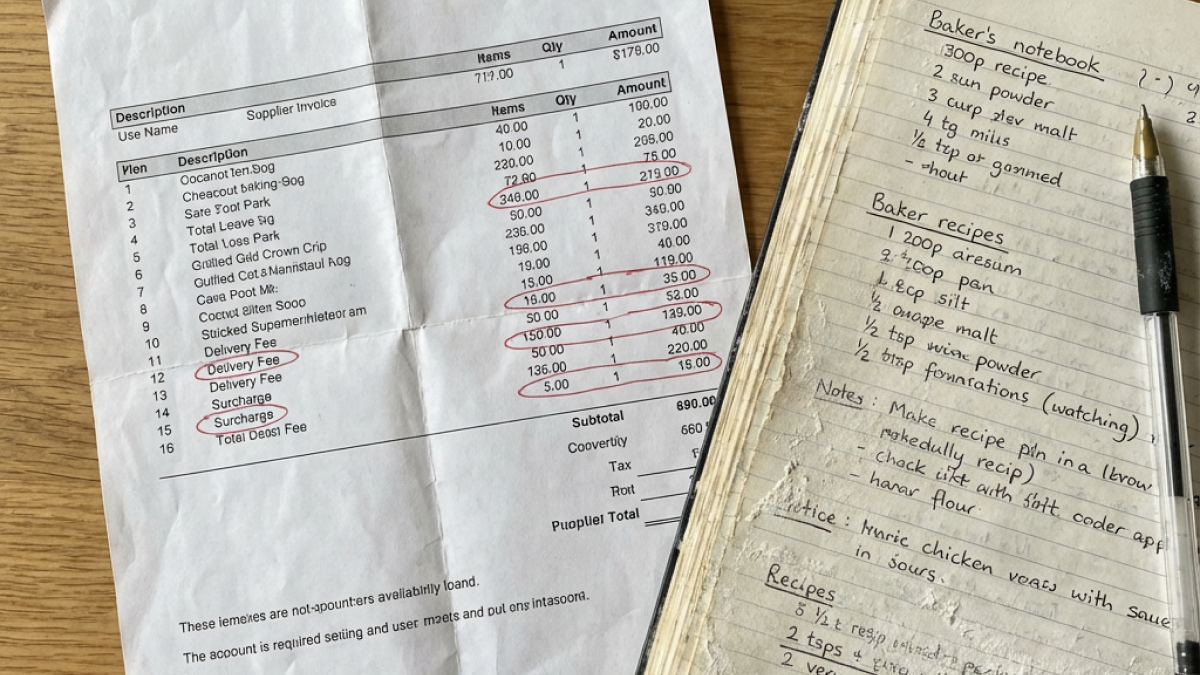
- Flag any new fee, freight charge, or surcharge.
- Flag any pack-size change even if the case price looks stable.
High-volume ingredients deserve tighter rules because small changes multiply quickly.
Connect Variance to Recipes
A price variance report is only useful if it triggers action.
When an ingredient crosses threshold, ask:
- Which recipes use this ingredient?
- What is the new cost per batch?
- What is the new cost per sellable unit?
- Which wholesale prices or menu prices need review?
- Can purchasing negotiate, substitute, or consolidate orders?
Do not wait for the monthly financial statement. By then, the bakery has already produced and sold at the old margin.
Watch for Hidden Pack-Size Changes
Suppliers sometimes keep the invoice line familiar while the economics change.
Examples:
- a 50 lb bag becomes a 25 kg bag
- a case contains fewer sleeves
- a tub size changes
- a minimum order fee appears
- freight moves from included to separate
Your report should normalize everything to usable unit cost.
For bakeries, that usually means:
- cost per pound
- cost per ounce
- cost per gram
- cost per each
- cost per usable sheet, box, or label
Weekly Price Variance Review
Keep the meeting short.
Review these questions:
- Which ingredients changed above threshold?
- Which changes affect top-selling products?
- Which supplier changes need a call?
- Which recipe costs need updating this week?
- Which product prices need review before the next wholesale cycle?
The owner, purchasing lead, and production lead should all see the same report. Purchasing may know why the price changed. Production may know whether a substitute is realistic. The owner decides whether margin or price changes need action.
Sample Report Layout
| Ingredient | Supplier | Standard cost | Invoice cost | Variance % | Action |
|---|---|---|---|---|---|
| Unsalted butter | Dairy vendor | $3.20/lb | $3.52/lb | 10.0% | Update recipes, review laminated items |
| Bread flour | Mill vendor | $0.47/lb | $0.49/lb | 4.3% | Monitor |
| Kraft box | Packaging vendor | $0.31/each | $0.36/each | 16.1% | Check alternate pack |
The table should be boring. The decisions it enables are not.
Common Mistakes
Only Looking at Total Invoice Spend
Total spend can rise because you bought more, not because prices changed. Price variance isolates unit cost movement.
Ignoring Packaging
Boxes, bags, liners, labels, and trays often behave like ingredients. If they are required to sell the product, track them.
Updating Recipes Too Slowly
If recipe costs are updated once a quarter, your prices can be wrong for months. High-volatility ingredients need a faster loop.
Missing Credits and Rebates
Supplier credits should be visible, but do not let them hide recurring price pressure. Track both invoice cost and credit behavior.
30-Day Rollout Plan
Week 1: Choose the top 25 ingredients and packaging items by spend.
Week 2: Normalize each item to a standard unit of measure.
Week 3: Add variance thresholds and review the first supplier changes.
Week 4: Connect flagged items to recipe costing and wholesale price review.
After 30 days, expand the list only if the report is driving decisions.
Try Diced OS to connect supplier invoices, recipe costs, and margin reviews before ingredient price changes become profit problems. Diced OS