
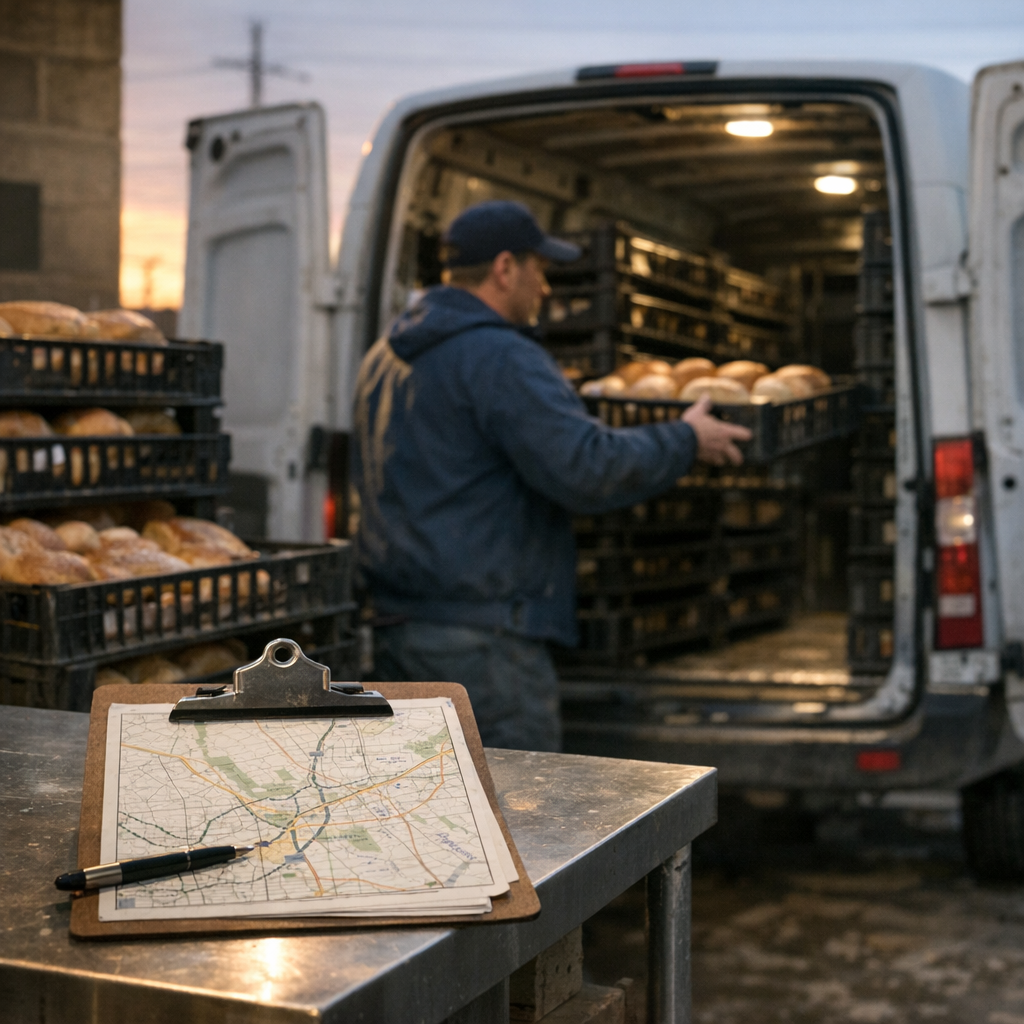
Wholesale Delivery Zones and Order Minimums
Published: February 22, 2026
Wholesale delivery feels like a service, but it is also a cost center. If you do not set zones and minimums, you end up subsidizing small orders with high route costs. A simple zone strategy protects margin and makes delivery consistent.
This guide shows how to design zones, set minimums, and keep customers on board.
Calculate your true delivery cost
Start with the real cost per delivery. You cannot set minimums without this number.
Include:
- Driver labor cost per hour
- Vehicle cost per mile
- Average delivery time
- Fuel and maintenance
Example:
- Driver labor: $22/hour
- Vehicle cost: $0.60/mile
- Average delivery: 45 minutes and 18 miles round trip
Cost per delivery is roughly $22 x 0.75 + $0.60 x 18 = $16.50 + $10.80 = $27.30
Create simple delivery zones
Too many zones cause confusion. Start with three.
- Zone 1: 0 to 5 miles
- Zone 2: 5 to 12 miles
- Zone 3: 12 to 20 miles
Adjust based on your actual market. The goal is a simple map your team and customers understand.
Set minimums by zone
Order minimums should cover delivery cost and a baseline margin. Use your cost per delivery to set the floor.
Example minimums:
- Zone 1: $150
- Zone 2: $250
- Zone 3: $350
If a customer cannot hit the minimum, offer pickup or a delivery fee.
Add a fee option for flexibility
Fees can keep small customers while protecting your costs.
Suggested approach:
- Below minimum: add delivery fee that covers the cost gap
- At or above minimum: delivery included
Keep the fee predictable and published. Surprises cause churn.
Pair zones with delivery days
Delivery zones work best when they align with your schedule.
Example schedule:
- Zone 1: Monday to Friday
- Zone 2: Tuesday and Thursday
- Zone 3: Wednesday only
This clusters stops, reduces dead miles, and improves on-time performance.
Communicate the policy early
Introduce zones and minimums with a calm, professional message. Frame it around reliable delivery and quality.
Sample message:
"To ensure reliable delivery and maintain quality, we are organizing routes by delivery zone and setting order minimums. This helps us keep deliveries on time and costs predictable for everyone."
Review and adjust quarterly
Zone costs change with fuel, labor, and route growth. Review every quarter and adjust minimums when needed.
Track:
- Average delivery cost by zone
- On-time rate by zone
- Average order size by zone
If a zone consistently loses money, raise the minimum or reduce delivery frequency.
Try Diced OS to manage wholesale customers, set delivery policies, and keep routes profitable. Diced OS
Related posts

Bakery Prep List by Station: Keep Mixing, Shaping, Baking, and Packing in Sync
Bakery Returnable Crate Tracking: Stop Losing Delivery Totes and Trays
Bakery Standing Orders for Wholesale Accounts: Keep Recurring Deliveries Accurate
Bakery Lot Traceability: A Practical Recall-Ready System for Small Teams
