Bakery Returnable Crate Tracking: Stop Losing Delivery Totes and Trays
Published: June 2, 2026
Reusable crates and trays are easy to ignore until the bakery runs short during a busy dispatch window.
One missing crate is not a crisis. A few missing crates per route per week becomes a real cost, especially when packaging is tied to wholesale delivery reliability.
Returnable crate tracking gives wholesale bakeries a simple way to know what went out, what came back, and which accounts need follow-up.
What Counts as Returnable Packaging
Track anything that is expected to come back.
Common examples:
- plastic bread crates
- pastry totes
- sheet pan carriers
- insulated delivery bags
- reusable trays
- branded bins
- freezer totes
- catering racks
If replacement cost is meaningful or availability affects delivery, it belongs in the system.
The Core Problem: Crate Float
Crate float is the number of returnable units outside the bakery at any given time.
`text Crate float = Units sent out - Units returned `
Some float is normal. Customers may hold yesterday's crates until the next delivery. Problems start when float grows without visibility.
You need to know:
- which customer has the crate
- which route delivered it
- when it went out
- when it should return
- whether a deposit or replacement charge applies
Track by Customer and Route
Route-level tracking helps drivers recover packaging without guessing.
A simple crate log should include:
- delivery date
- route
- customer
- crate type
- quantity sent
- quantity returned
- ending balance
- driver notes
The ending balance matters more than any single day. A customer who always holds two crates may be fine. A customer whose balance grows from two to nine needs attention.
Use Deposits Carefully
Deposits can work, but they should not become a substitute for good tracking.
Deposit rules should define:
- which packaging requires a deposit
- deposit amount per unit
- when the deposit is charged
- when it is credited
- how lost or damaged units are handled
Keep the policy visible in customer onboarding. If deposits appear only after a dispute, the conversation becomes harder.
Build a Weekly Crate Reconciliation
Once a week, review:
- customers with highest crate balances
- routes with recurring missing returns
- damaged packaging
- replacement purchases
- deposits charged and credited
This review can take 15 minutes if the daily log is consistent.
The goal is not to blame drivers or customers. The goal is to keep packaging available and costs visible.
Driver Workflow
Make the return process easy during delivery.
Driver checklist:
- Drop today's order.
- Ask for empties from the prior delivery.
- Count returned crates by type.
- Note damaged units.
- Record exceptions before leaving the stop.
- Return crates to the correct bakery staging area.
If the driver records returns at the end of the route from memory, balances will drift.
Customer Communication
Most customers cooperate when expectations are clear.
Use plain language:
- "Please return empty totes on your next delivery day."
- "Your current balance is 6 crates."
- "We need 4 crates returned this week to avoid a replacement charge."
- "Damaged crates are billed at replacement cost."
Send the balance before it becomes an argument.
When to Charge for Missing Crates
Set thresholds before emotions enter the conversation.
Example policy:
- 0-3 units outstanding: normal operating float
- 4-7 units outstanding for more than 14 days: reminder
- 8+ units outstanding or 30+ days old: deposit or replacement charge
Adjust the numbers for your delivery cadence and packaging cost.
Hidden Costs of Poor Crate Tracking
Lost crates create more than replacement expense.
They also cause:
- rushed repacking
- weaker product protection
- delayed routes
- extra disposable packaging
- driver frustration
- customer disputes
The direct cost is easy to count. The operational cost is usually larger.
Start Simple
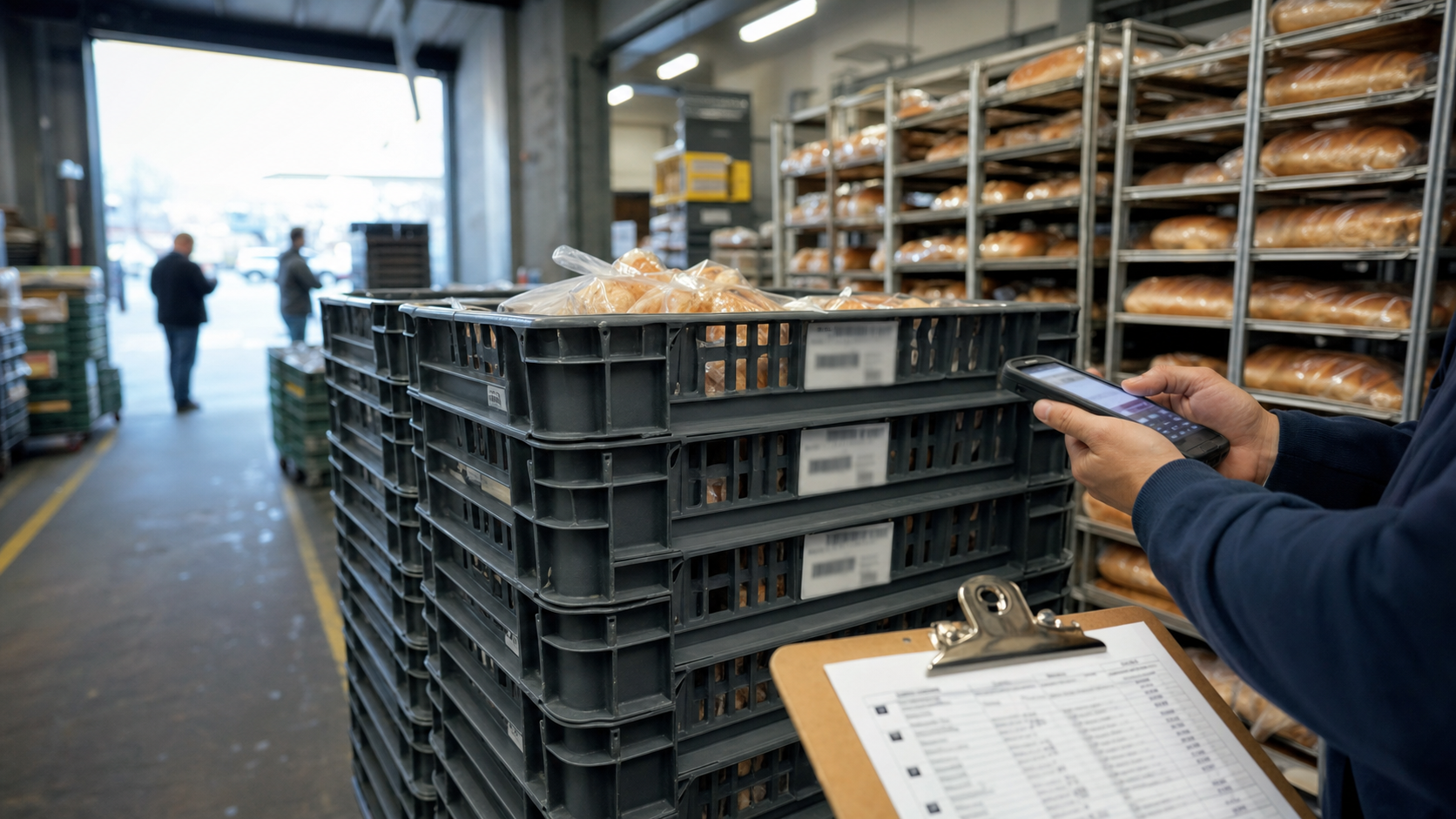
You do not need barcode scanning on day one.
Start with:
- a customer balance sheet
- daily send/return counts
- one weekly reconciliation
- a written deposit policy
- route notes for exceptions
Add scanning later if volume justifies it.
30-Day Setup Plan
- Count all returnable packaging by type.
- Assign replacement cost to each type.
- Create customer balances starting from zero or from a physical count.
- Train drivers to record returns at each stop.
- Review balances weekly.
- Contact accounts with growing balances.
- Add deposit rules for chronic losses.
Crate tracking is not glamorous, but it protects cash and keeps delivery moving.
Try Diced OS to track wholesale deliveries, customer exceptions, and returnable packaging balances without another spreadsheet. Diced OS