

On-Time Delivery Metrics for Wholesale Bakeries: What to Track Weekly
Published: March 17, 2026
If you ask wholesale customers why they switch bakery suppliers, delivery reliability is usually near the top.
Price matters. Product quality matters. But repeated late deliveries disrupt their own service, and that is hard to forgive.
The fix is not only “drive faster.” You need clear metrics and a weekly process.
Start with One Core KPI: OTIF
OTIF means On Time, In Full.
For wholesale bakeries, a delivery counts as OTIF only when:
- It arrives within the agreed window
- All ordered items and quantities are delivered correctly
Formula:
OTIF % = (Deliveries that were on time and complete / Total deliveries) x 100
This single KPI combines speed and accuracy, which customers experience as reliability.
Add Four Supporting Metrics
1) Stop-Level On-Time Rate
Measures punctuality only.
- Useful when your fill rates are already strong
- Helps isolate route and dispatch issues
2) Fill Accuracy Rate
Measures order completeness and substitution errors.
- Useful when production and picking are unstable
3) Average Minutes Late (for late stops only)
This reveals severity. Five minutes late is different from forty-five.
4) Delivery Failure Reason Mix
Tag each miss with one primary reason:
- Production delay
- Picking error
- Vehicle/traffic delay
- Customer-side access issue
Without reason tagging, improvement efforts become guesswork.
Set Realistic Targets by Customer Type
Different accounts have different tolerance.
- Cafes with early rush: tighter windows, high punctuality target
- Offices with broad receiving windows: slightly more flexible
- Hotels/events: very low tolerance for incomplete orders
Set account-level service commitments and review performance against those, not one generic threshold.
The Weekly Review Cadence That Works
Run a 30-minute delivery KPI review each week:
- OTIF trend for last 4 weeks
- Top 10 failed stops by impact
- Root cause breakdown by reason tag
- Corrective actions with owner and deadline
Keep it operational. Avoid long theory discussions.
Quick Wins to Improve On-Time Performance
Freeze Route Sequencing Earlier
Last-minute route changes create avoidable lateness. Lock route order after a daily cutoff unless there is a true emergency.
Add Load-Ready Check at Dispatch
Before departure, verify:
- Correct crate count
- Correct customer labels
- Critical high-priority items present
A 3-minute check prevents avoidable return trips.
Classify Customers by Window Strictness
If all stops are treated equally, critical accounts suffer. Prioritize strict-window customers first.
Separate Chronic vs Random Delays
Traffic randomness happens. Chronic misses at the same stops often indicate wrong route design or unrealistic prep timing.
Common Reporting Mistakes
Measuring “Departed on Time” Instead of “Arrived on Time”
Customers do not care when the van left. They care when it arrived.
Hiding Partial Deliveries in Notes
If incomplete orders are not counted as failures, OTIF looks better than reality.
Ignoring Early Deliveries
Too early can also be a service failure if receiving teams are not ready.
Practical Improvement Plan (30 Days)
Week 1:
- Standardize delivery window definitions
- Begin OTIF and reason tracking
Week 2:
- Identify top failure routes and top failure accounts
- Apply dispatch checklist
Week 3:
- Adjust sequence and cutoff times on weak routes
- Train drivers and loaders on new standards
Week 4:
- Review OTIF trend and late-minute severity
- Lock in process changes that delivered measurable gains
How Diced OS Helps
Diced OS helps wholesale bakery teams move from anecdotal complaints to measurable delivery control:
- Track order accuracy and fulfillment outcomes
- Keep production and dispatch aligned
- Surface performance patterns quickly for weekly review
Reliable delivery is a growth lever, not only an operations metric.
Want more consistent wholesale delivery performance? Try Diced OS: http://dicedos.com/
Related posts
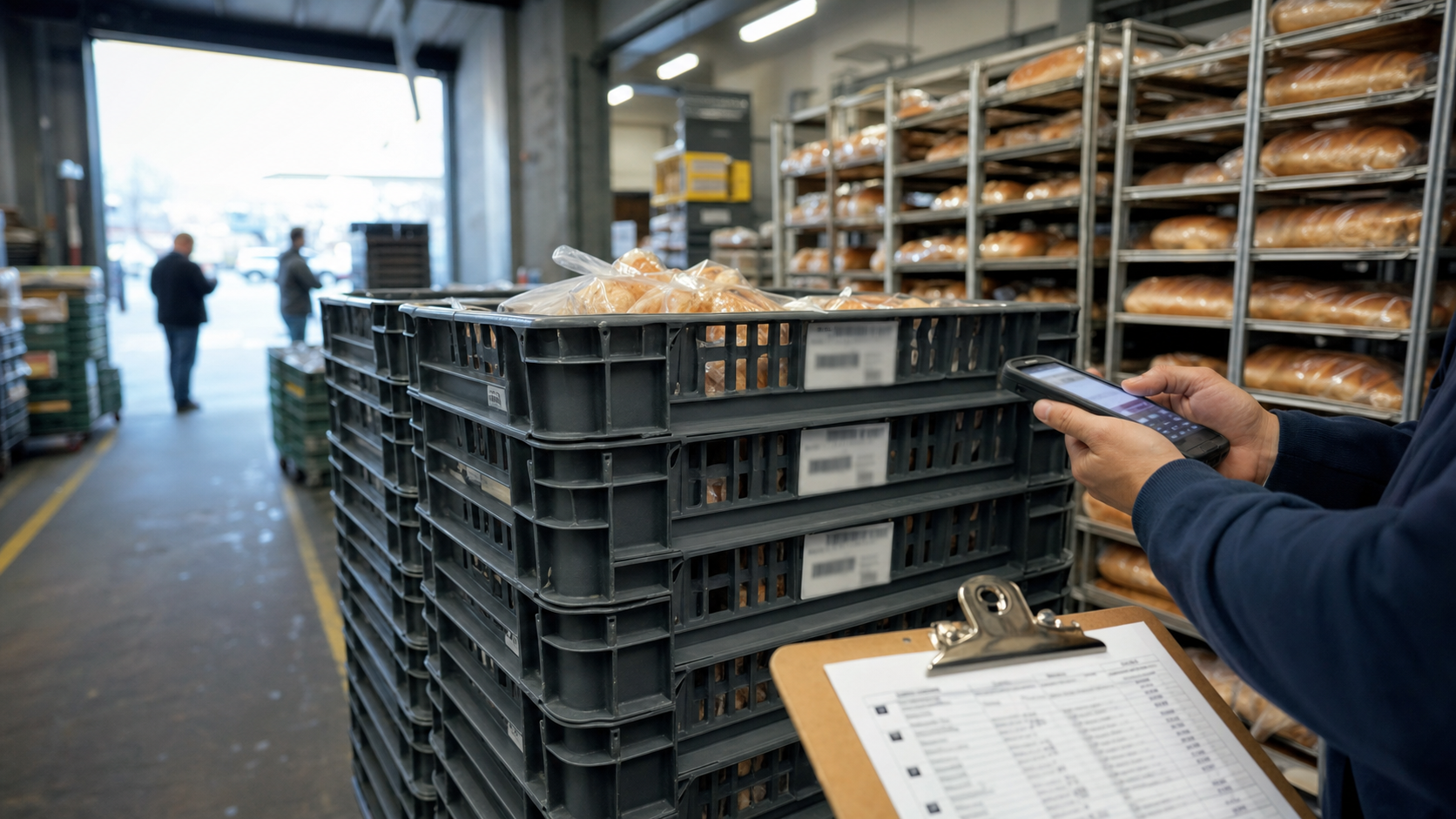
Bakery Returnable Crate Tracking: Stop Losing Delivery Totes and Trays
Bakery Standing Orders for Wholesale Accounts: Keep Recurring Deliveries Accurate
Bakery Shelf-Life and Date Code System: Keep Freshness Decisions Consistent
Bakery Packaging Cost Control: Track Boxes, Bags, and Labels Like Ingredients
