
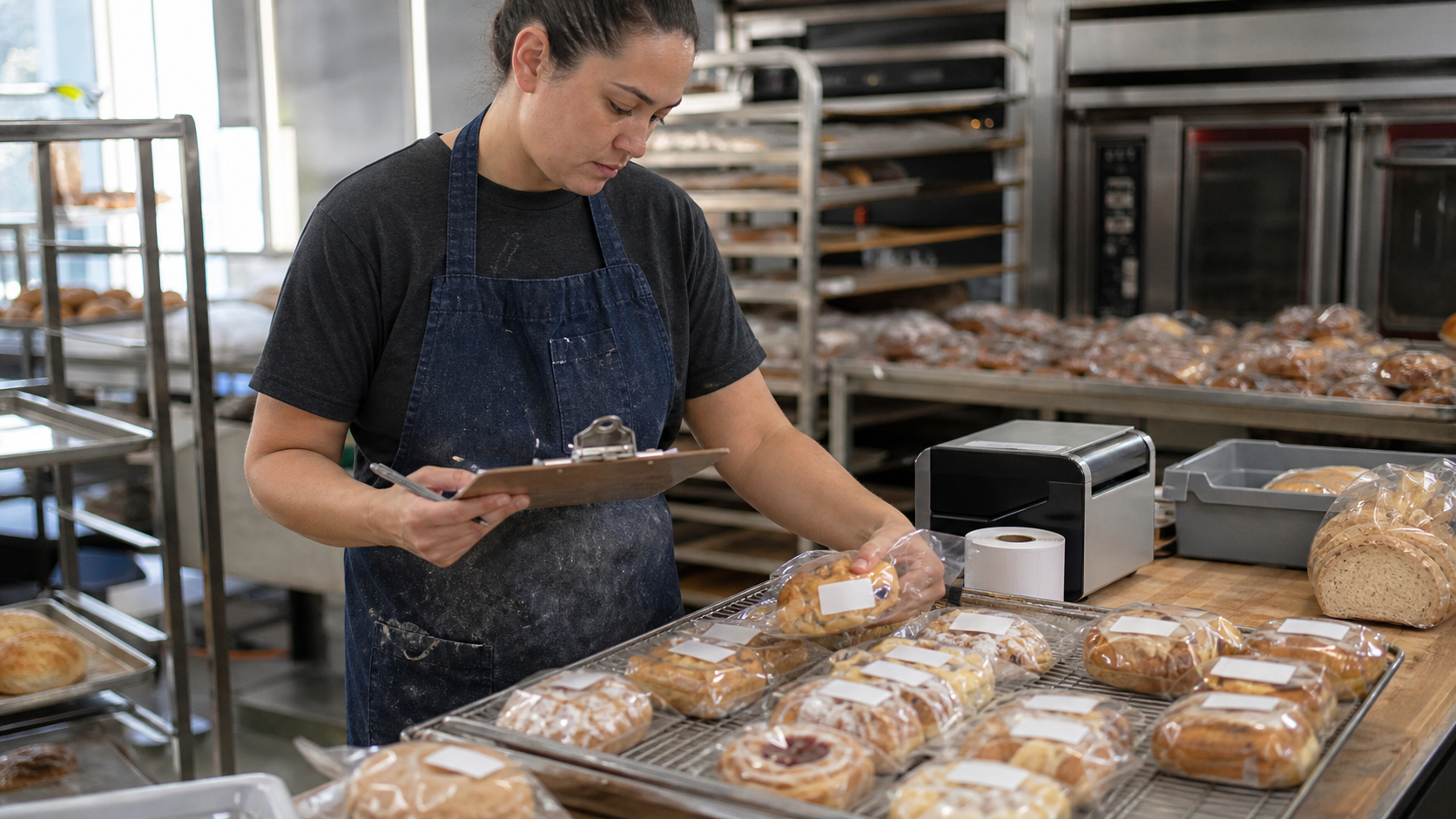
Bakery Shelf-Life and Date Code System: Keep Freshness Decisions Consistent
Published: May 22, 2026
Freshness decisions should not depend on who is working that day.
One person thinks a product is good for three days. Another pulls it after two. A wholesale customer stores it differently and complains on day four. Without a shelf-life and date code system, everyone makes a reasonable guess and the bakery absorbs the confusion.
A simple system makes freshness expectations visible.
Define Shelf Life by Product Family
Start with product families before individual SKUs.
Examples:
- lean breads
- enriched breads
- laminated pastries
- muffins and quick breads
- cookies
- cakes
- filled products
- refrigerated desserts
- frozen or par-baked items
For each family, define the expected shelf life under your normal storage conditions.
Then adjust for specific products. A plain cookie and a cream-filled pastry should not share the same rule just because both are baked goods.
Document the Storage Assumption
Shelf life only means something if storage is clear.
Record:
- room temperature, refrigerated, or frozen
- packaging type
- whether the product is sliced or whole
- whether filling or garnish changes the rule
- whether the product is for retail display or wholesale delivery
Example:
| Product Family | Storage | Internal Sell-By | Wholesale Guidance |
|---|---|---|---|
| Lean bread | Room temp, wrapped | 2 days | Use within 2 days |
| Muffins | Room temp, covered | 3 days | Best within 3 days |
| Cream-filled pastry | Refrigerated | 1 day | Keep refrigerated |
Align final rules with your food safety requirements, customer contracts, and local guidance.
Create a Date Code Format
Pick one format and train everyone.
A practical date code can include:
- production date
- sell-by date
- batch ID
- product code
Example:
PROD 2026-05-22 / SELL BY 2026-05-24 / BATCH 20260522-MUF-01
If your labels have limited space, choose the most important fields and keep the rest on the batch record.
Separate Internal Pull Dates From Customer Guidance
Your internal pull date and customer-facing guidance may be different.
Internal pull dates control what your team can sell. Customer guidance explains how the buyer should store and use the product.
For wholesale, write customer guidance clearly:
- receive and store immediately
- keep refrigerated when required
- display only within the agreed window
- do not freeze unless approved
- rotate older deliveries first
This reduces disputes where the product left your bakery in good condition but was mishandled later.
Review Waste by Date Code
Date coding creates better waste data.
Track:
- product pulled before sell-by
- product left at sell-by
- wholesale credits tied to freshness
- returns by customer
- products with frequent date extensions
If one SKU repeatedly reaches pull date unsold, the issue may be forecast, pack size, shelf life, or customer order pattern.
Keep Exceptions Visible
Seasonal products, new recipes, and custom wholesale items often need temporary shelf-life rules.
Make exceptions visible:
- record who approved the rule
- set an expiration date for the exception
- review customer feedback
- update the standard only after evidence supports it
Temporary rules should not become permanent by accident.
Try Diced OS
Diced OS helps bakeries organize recipe, production, inventory, and customer data so operational rules are easier to follow across the team.
Try Diced OS to keep freshness decisions more consistent from production to delivery.
Related posts
Bakery Standing Orders for Wholesale Accounts: Keep Recurring Deliveries Accurate

Bakery Packaging Cost Control: Track Boxes, Bags, and Labels Like Ingredients

Customer Profitability by Account: A Practical Model for Wholesale Bakeries

Weekly Cash Flow Forecast Template for Bakery Owners
