Bakery Lot Traceability: A Practical Recall-Ready System for Small Teams
Published: May 18, 2026
Lot traceability sounds like something only large manufacturers need. In reality, small bakeries need it too, especially when they sell wholesale, handle allergens, or produce in batches that move to multiple customers.
The goal is simple: if one ingredient lot has a problem, you should know which batches used it and which customers received those products.
This is not a legal compliance guide. Requirements vary by product, location, and customer. But a practical traceability system will make your operation calmer, faster, and more credible when something goes wrong.
The Traceability Question You Need to Answer
A recall-ready bakery should be able to answer four questions quickly:
- Which supplier lot did we receive?
- Which production batches used that lot?
- Which finished products came from those batches?
- Which customers or locations received those products?
If your current process cannot answer those questions without digging through paper stacks, start here.
Step 1: Capture Ingredient Lots at Receiving
Traceability starts before production.
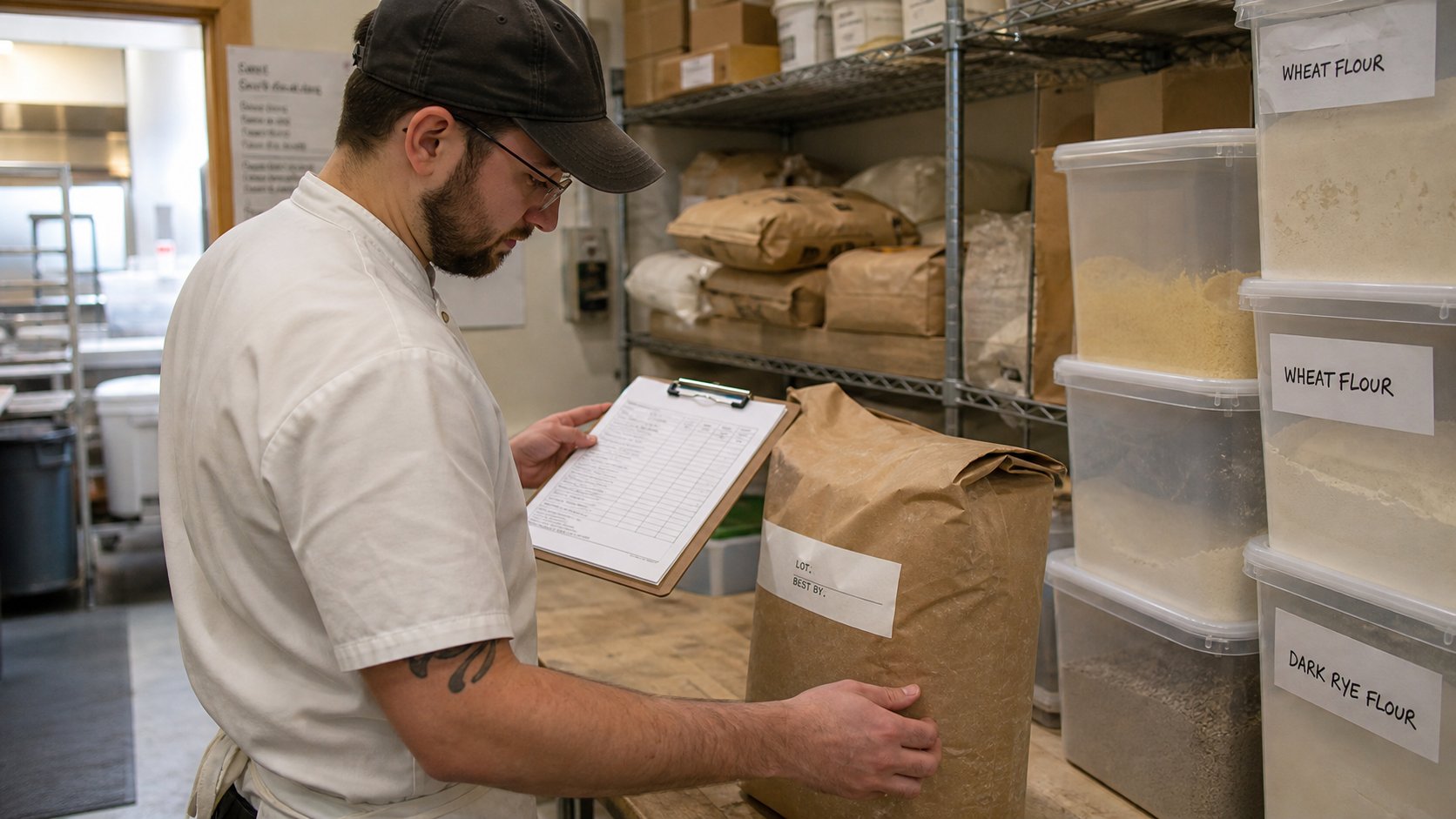
At receiving, record:
- supplier name
- item name
- delivery date
- supplier lot or batch code
- quantity received
- expiration or best-by date when available
- storage location
Do this for high-risk and high-volume ingredients first: flour, dairy, eggs, nuts, seeds, chocolate, fillings, and anything tied to allergens.
The mistake to avoid is writing lot codes only on the invoice. Invoices are finance records. Lot data has to connect to inventory and production.
Step 2: Make Lot Selection Part of Production
When a team starts a batch, they should record which ingredient lots were actually used.
For each batch, capture:
- product or recipe name
- batch ID
- production date
- mixer or station
- operator
- ingredient lots used
- expected yield
- actual yield
Do not rely on "we probably used the oldest bag." That may be true most days, but recall work needs records, not assumptions.
Step 3: Link Batches to Finished Goods
Finished goods need enough identity to connect back to the batch.
For wholesale bakeries, that may be:
- product SKU
- production date
- batch ID
- pack count
- date code
- customer order number
You do not need a complex label system on day one. Even a batch ID written consistently on the pack sheet is better than a clean-looking process with no connection back to production.
Step 4: Connect Shipments to Customers
The final link is customer delivery.
For each order, record:
- customer name
- delivery date
- products shipped
- quantity shipped
- batch ID or production date
- route or pickup record
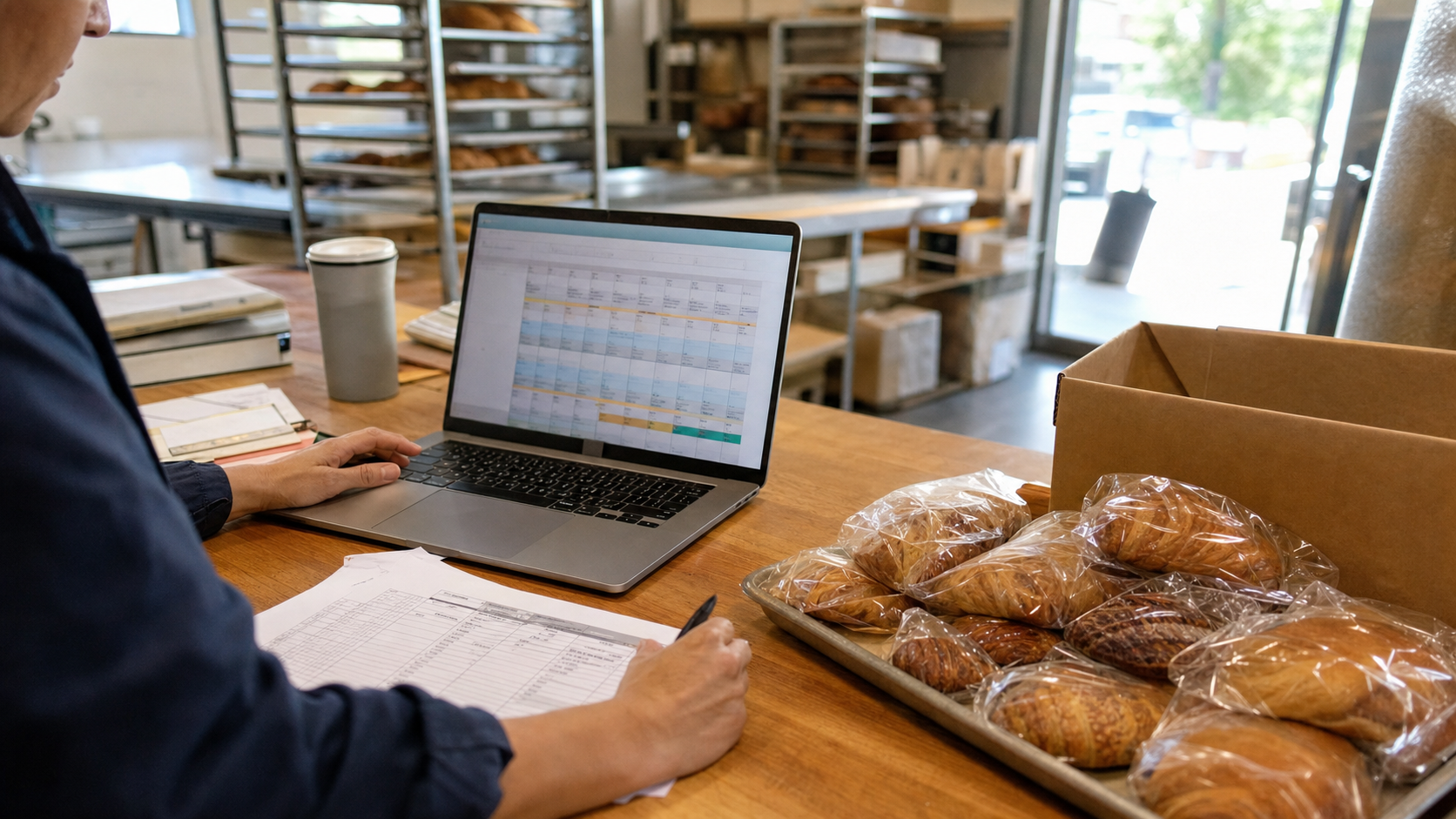
If an issue appears later, this lets you create a customer contact list quickly instead of rebuilding history from memory.
Run a Mock Recall Test
A traceability system is only useful if it works under pressure.
Once per quarter, choose one ingredient lot and run a mock recall:
- Find every batch that used the ingredient lot.
- Find every finished product tied to those batches.
- Find every customer or location that received those products.
- Time the exercise.
- Document gaps and fix one before the next test.
If it takes more than a few hours to answer the basic questions, the process is too dependent on tribal knowledge.
Keep the Workflow Simple Enough to Use
Traceability fails when the recordkeeping is too heavy for the shift.
Make it practical:
- use one batch ID format
- put lot capture in the production checklist
- train one backup person per shift
- review incomplete records weekly
- keep supplier labels until ingredients are fully used
The best system is the one your team can actually maintain on a busy morning.
Try Diced OS
Diced OS helps bakeries connect production, ingredient costs, vendors, and operating records so teams can stop chasing data across paper, spreadsheets, and inboxes.
Try Diced OS to bring more traceability and control into your bakery workflow.
Related posts
Recipe Version Control for Multi-Location Bakeries
Ingredient Substitution Policy for Bakeries
Bakery Shift Handoff Checklist That Prevents Morning Surprises
Bakery Prep List by Station: Keep Mixing, Shaping, Baking, and Packing in Sync