Recipe Version Control for Multi-Location Bakeries
Published: February 24, 2026
Multi-location bakeries grow fast, but recipes often grow messy. One location tweaks hydration, another changes butter, and suddenly the same SKU tastes different across town. Version control fixes this by making changes intentional, documented, and easy to roll out.
This guide outlines a simple recipe version control system for bakery teams.
Define the source of truth
Pick one system that holds the official recipe. No printed binders should be considered the master.
Best practice:
- One digital recipe library
- Access for all locations
- Change log visible to managers
If the source of truth is unclear, versions will drift immediately.
Establish version numbers
Assign a version number to every recipe. Use a simple format like 1.0, 1.1, 2.0.
- Major change: new version number (2.0)
- Minor change: decimal update (1.1)
Version numbers make it clear which recipe is in use at each location.
Create a change request process
No recipe change should go live without a request and a review.
Required fields:
- Proposed change
- Reason for change
- Test results
- Cost impact
This keeps decisions visible and protects quality.
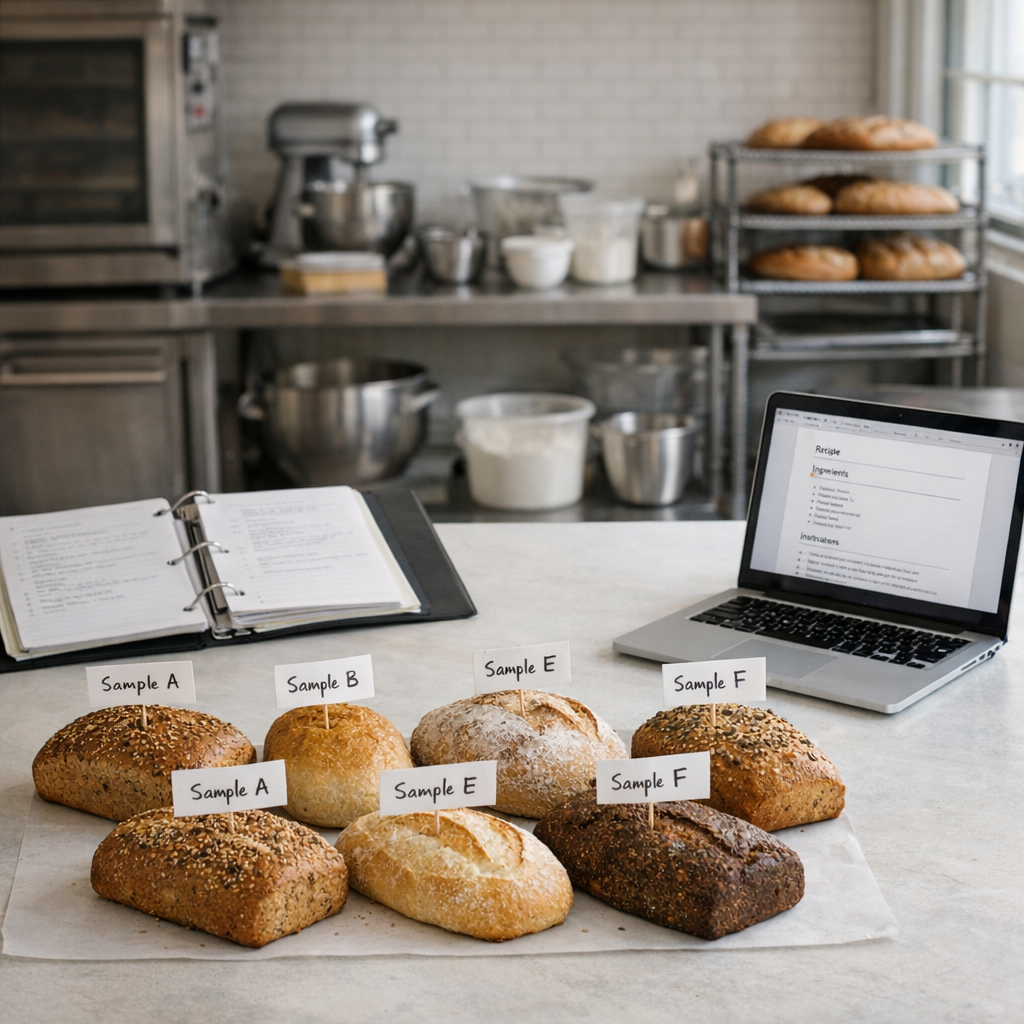
Test before you roll out
Every change should be tested in a controlled bake. Keep the test small and document results.
Test results should include:
- Yield and portion size
- Texture and flavor notes
- Bake time adjustments
- Cost delta
If the test fails, the change is rejected or revised.
Roll out with clear timing
When a change is approved, roll it out in a controlled way.
Suggested steps:
- Announce the change date to all locations
- Update the recipe card in the system
- Flag old versions as archived
- Confirm each location switched
A firm rollout date prevents overlapping versions.
Train the team on the change
Even small recipe changes can fail without training. Teach the “why” behind the change.
Training checklist:
- What changed
- Why it changed
- What to watch for in the bake
This makes consistency more likely.
Audit monthly
A simple monthly audit catches drift early.
Audit steps:
- Randomly check recipe versions in use
- Compare batch weights to standard
- Review any local notes or overrides
If a location is off-version, correct it quickly.
Try Diced OS to manage recipe versions, document changes, and keep every location consistent. Diced OS
Related posts
Bakery Lot Traceability: A Practical Recall-Ready System for Small Teams

Ingredient Substitution Policy for Bakeries

Bakery Shift Handoff Checklist That Prevents Morning Surprises

Bakery Prep List by Station: Keep Mixing, Shaping, Baking, and Packing in Sync