Par-Baked and Frozen Dough Inventory for Bakeries: Control Stock Without Losing Freshness
Published: June 3, 2026
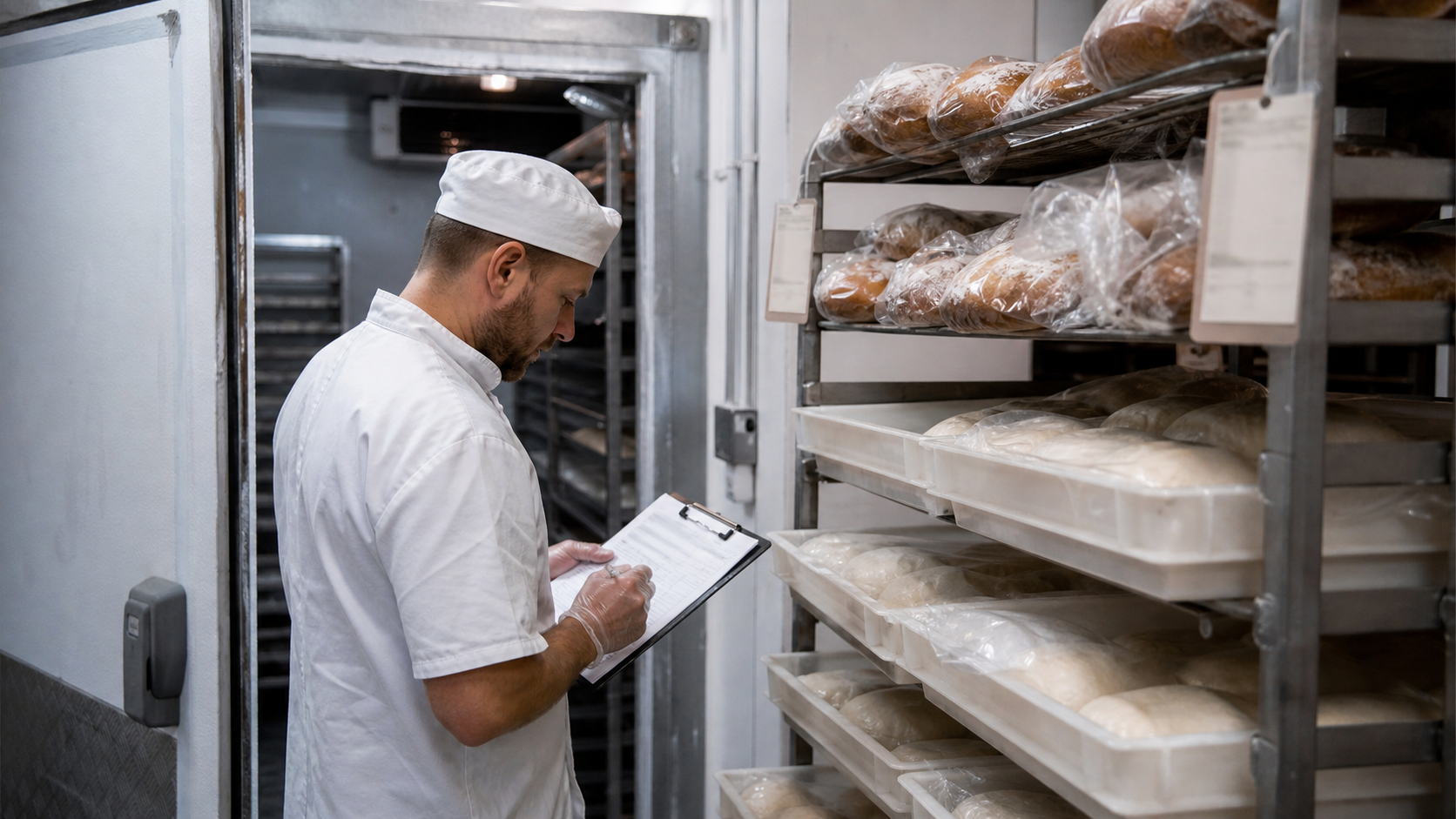
Par-baked products and frozen dough can make a bakery more flexible. They help absorb demand swings, reduce early-morning pressure, and support wholesale accounts that need consistent supply.
They can also hide inventory problems.
If frozen stock is not tracked carefully, bakeries end up with old batches, unclear thaw plans, inaccurate costs, and production teams that do not trust the freezer count.
Why Freezer Inventory Needs Its Own Rules
Frozen dough and par-baked items are not the same as dry ingredients.
They have:
- batch identity
- shelf-life limits
- thaw requirements
- finishing instructions
- labor already invested
- recipe cost already embedded
A bag of flour is raw material. A tray of frozen croissants already contains ingredients, labor, and time. Losing it hurts more.
Track Inventory by Batch
Every freezer batch should have a basic record:
- item name
- batch date
- production batch ID
- quantity frozen
- unit size
- expected shelf life
- freezer location
- thaw or bake-off instructions
- cost per unit
If a team member cannot identify what the product is, when it was made, and how it should be finished, the batch is not controlled.
Use First-Expired, First-Out
FEFO matters even in the freezer.
First-in, first-out is useful, but first-expired, first-out is better when different products have different shelf lives.
For each item, define:
- freeze date
- best-use date
- discard date
- quality check point
Do not rely on "it is frozen, so it is fine." Quality still changes over time.
Build a Thaw Plan
The freezer count is only half the system. The thaw plan turns inventory into usable production.
A thaw plan should answer:
- what needs to move from freezer to cooler
- when it needs to move
- how much is needed by delivery day
- who is responsible
- what backup quantity is allowed
Missed thaw timing can create the same chaos as a missed bake. The product exists, but it is not usable when needed.
Separate Available, Committed, and Held Stock
Not all freezer inventory is available.
Use three buckets:
- Available: can be used for any approved order
- Committed: reserved for a specific customer, event, or production day
- Held: quality check, test batch, or do-not-use status
This prevents a team from using stock that sales already promised to a wholesale customer.
Cost Frozen Inventory Correctly
Par-baked and frozen dough cost includes more than ingredients.
Include:
- ingredient cost
- mixing labor
- shaping labor
- partial bake or processing labor
- packaging used before freezing
- freezer storage allocation if material
- expected loss or shrink
If the cost model treats frozen dough like raw dough, finished-product margins will be wrong.
Freezer Count Cadence
Use a layered count system:
- daily visual check for critical items
- weekly count for high-volume frozen products
- monthly full freezer reconciliation
- immediate adjustment after large production runs or wholesale events
The higher the value or usage rate, the more often it should be counted.
Common Failure Modes
No Location Discipline
Teams know product exists but cannot find it during the rush. Assign freezer zones and keep like items together.
Unlabeled Test Batches
Test batches migrate into regular stock and create quality inconsistency. Label tests clearly or keep them separate.
Over-Freezing Slow Movers
Freezing slow sellers can delay the decision to cut or reduce them. Track movement rate, not just quantity.
Thawing Without Demand
Once product leaves the freezer, the clock starts. Thaw plans should be tied to real orders and controlled buffer.
Freezer Inventory Metrics
Track these weekly:
| Metric | Purpose |
|---|---|
| Frozen units on hand | Basic stock visibility |
| Days of supply | Prevents overproduction |
| Aging stock by item | Protects quality |
| Thaw plan accuracy | Measures planning discipline |
| Freezer shrink | Shows loss or count drift |
These metrics help the freezer become a controlled buffer instead of a hiding place.
30-Day Setup Plan
- Choose the top frozen or par-baked products.
- Define shelf-life rules for each item.
- Label all new batches with date, quantity, and batch ID.
- Create freezer zones.
- Run weekly counts for priority items.
- Add a thaw plan to the daily production meeting.
- Review aging stock before making new batches.
Frozen inventory should make the bakery more predictable, not less.
Try Diced OS to connect freezer inventory, batch records, thaw plans, and production demand in one operating system. Diced OS
Related posts
Bakery Prep List by Station: Keep Mixing, Shaping, Baking, and Packing in Sync
Bakery Preventive Maintenance Calendar: Stop Equipment Issues Before the Rush
Bakery Labor Standards by SKU: Know Which Products Eat the Schedule

FEFO Inventory Rotation for Bakeries: Reduce Waste Without Slowing Production