
FEFO Inventory Rotation for Bakeries: Reduce Waste Without Slowing Production
Published: March 15, 2026
Most bakeries already understand FIFO. The first bag in should be the first bag out.
The problem is that ingredients do not all age at the same speed, and delivery dates do not always match expiration dates. That is where FEFO wins.
FEFO means First Expired, First Out. You use the lot that expires soonest, even if it was delivered later than another lot.
For bakeries using dairy, yeast, fruit purees, fillings, and specialty flours, this one shift can lower waste fast.
Why FEFO Works Better Than FIFO in Real Bakeries
FIFO assumes time in storage equals freshness risk. That is often wrong.
A cream delivery received yesterday might expire before butter received last week. If your team only follows arrival order, you can still throw away usable inventory.
FEFO aligns the picking decision with product life, not delivery order.
Benefits most bakeries see within 30 to 60 days:
- Lower ingredient spoilage
- Fewer production interruptions from expired items discovered late
- Better lot discipline for quality control
- Less panic buying at premium prices
Ingredients That Should Be FEFO-Managed First
Start where waste is most expensive.
- Dairy and egg products
- Fresh fruit and purees
- Custard, fillings, and cream bases
- Nuts and seeds with shorter shelf life
- Pre-mixes with strict use-by dates
Dry staples like sugar and high-turn flour can stay simpler at first. Expand once the process is stable.
Set Up a FEFO System in One Week
Day 1: Define Your Label Standard
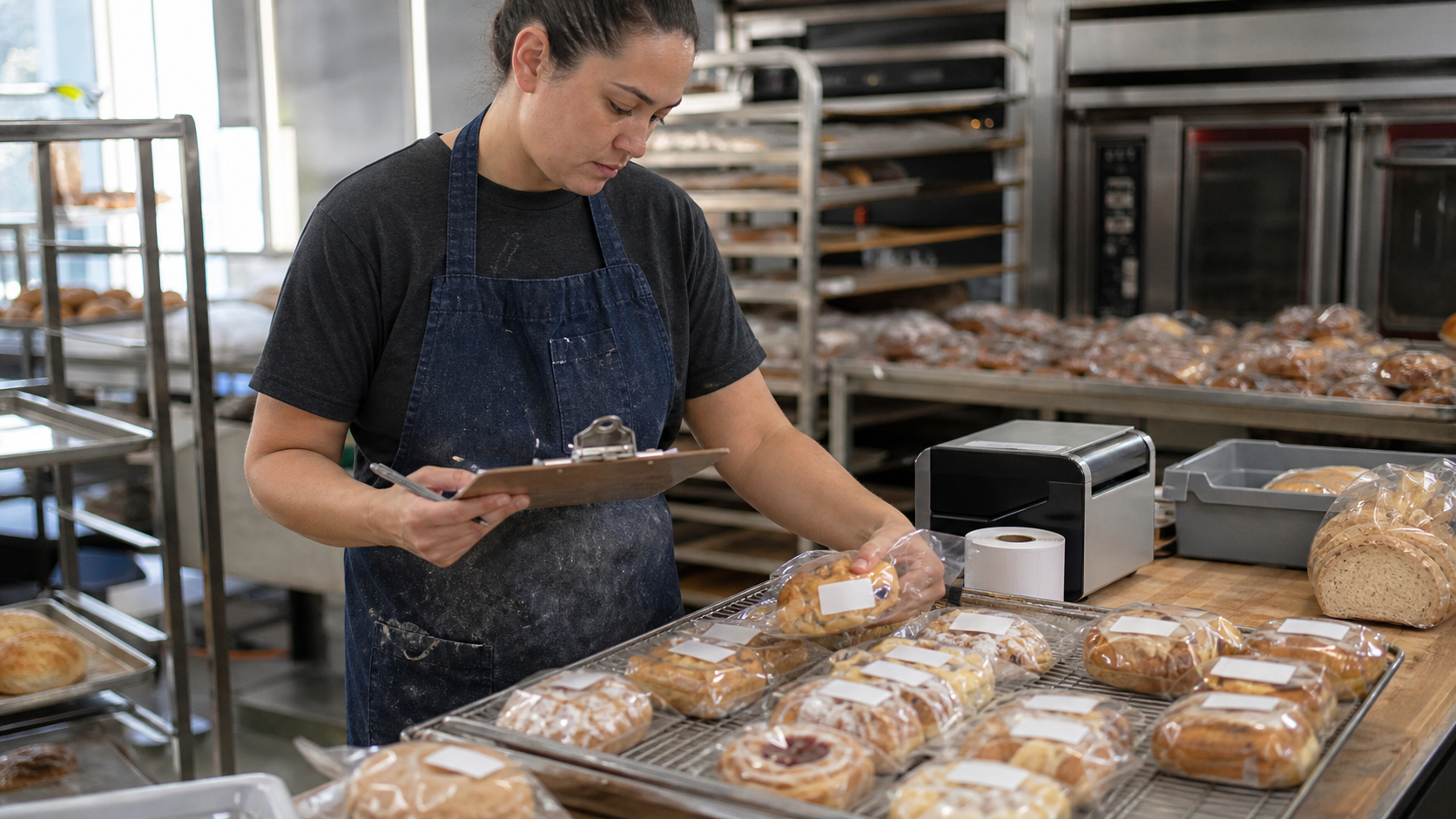
Every opened or received item needs a visible label with:
- Product name
- Lot or batch number (if available)
- Received date
- Expiration/use-by date
Keep this format identical across all storage areas. If labels look different by station, compliance drops.
Day 2: Create Color Zones by Expiry Window
Use shelf stickers or bin clips:
- Red: expires in 0 to 3 days
- Yellow: expires in 4 to 7 days
- Green: expires in 8+ days
A quick visual cue helps line staff pick correctly without extra instructions during rush prep.
Day 3: Assign a 10-Minute Daily FEFO Check
One person per shift scans red and yellow zones and reports:
- Items at risk of expiring before use
- Items with damaged or missing labels
- Any mismatch between physical stock and count sheet
This short routine prevents end-of-week surprises.
Day 4: Add FEFO to Prep Pull Sheets
Your pull sheet should list ingredient plus target lot/expiry, not just quantity.
Example:
- Heavy cream: 8 qt, use lot expiring 2026-03-18
- Raspberry puree: 3 tubs, use lot expiring 2026-03-17
The team should never guess which bin to open first.
Day 5: Build a “Use Soon” Production Rule
For ingredients entering red zone, trigger a rule:
- Use in featured product
- Shift to high-turn SKU
- Offer limited run to wholesale accounts
Good FEFO is not only storage discipline. It is production planning tied to shelf life.
FEFO Checklist for Receiving
At receiving, capture three things before items hit shelves:
- Expiration date is readable
- Lot is logged
- Item is placed behind lots that expire sooner
If receiving skips this step, the rest of the FEFO process becomes cleanup work.
Weekly FEFO KPI Dashboard
Track a small set of metrics:
- Expired ingredient value ($/week)
- Emergency purchases due to spoilage (count/week)
- Label compliance (% of bins with complete label)
- Red-zone carryover (items still red after 24h)
These KPIs help you confirm if the process is improving behavior, not just paperwork.
Common FEFO Mistakes
Overcomplicating Software Before Habits Exist
If team behavior is inconsistent, new tools will not solve it alone. Start with labels, zones, and daily checks first.
Treating FEFO as Inventory-Only
If production does not adjust menu output based on near-expiry inventory, waste remains high.
Ignoring Opened-Date Control
Some items have short life after opening. Include opened date where relevant, not only manufacturer expiry.
Where Diced OS Helps
Once FEFO basics are active, Diced OS makes execution easier:
- Track inventory by item and lot detail
- Surface near-expiry ingredients in one view
- Connect production planning with what must be used first
- Keep your team aligned across shifts and locations
The result is less waste and fewer last-minute substitutions.
If your bakery is still handling rotation from memory, FEFO is a strong upgrade and it does not require a full process rebuild to start.
Ready to tighten inventory control and cut avoidable waste? Try Diced OS: http://dicedos.com/
Related posts

Bakery Par Levels and Safety Stock: A Practical Guide

Mastering Bakery Inventory Management for Wholesale Success

Par-Baked and Frozen Dough Inventory for Bakeries: Control Stock Without Losing Freshness
Bakery Standing Orders for Wholesale Accounts: Keep Recurring Deliveries Accurate