
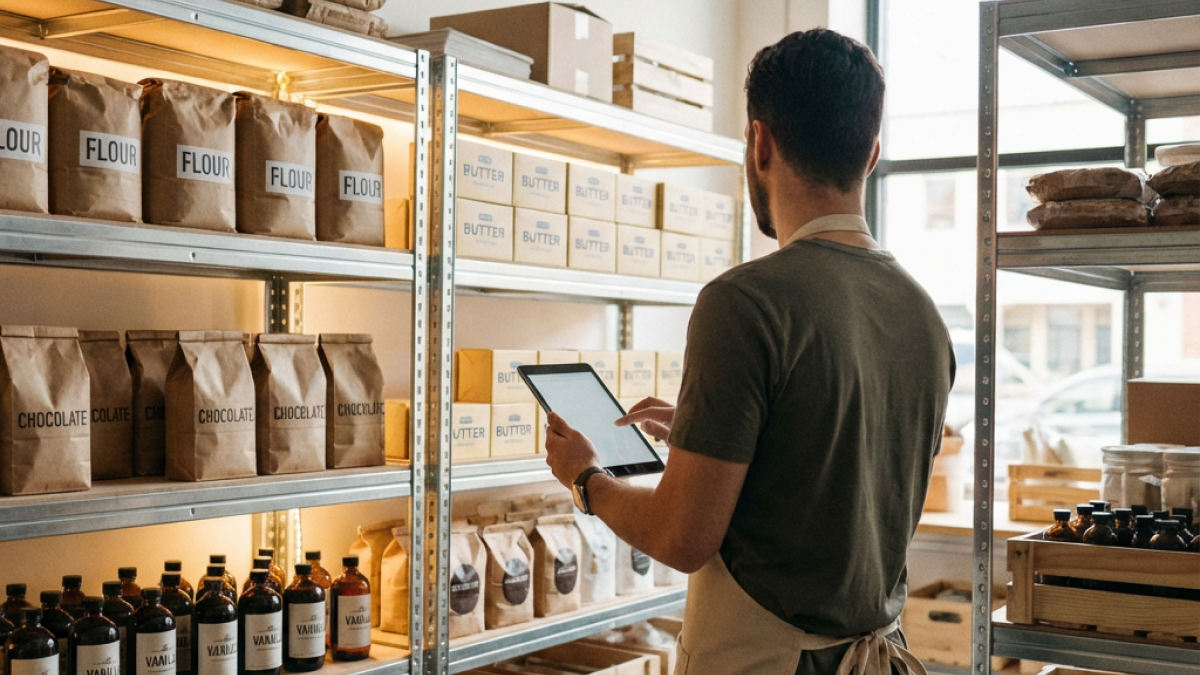
Mastering Bakery Inventory Management for Wholesale Success
Published: April 7, 2025
Poor inventory management shows up in two ways: running out of butter mid-shift, or throwing away $200 of expired yeast. Both are preventable with the right system.
The Par Level Formula
Par levels define minimum stock quantities. Calculate them like this:
` Par level = (Average daily use × Lead time) + Safety stock `
Example for bread flour:
- Average daily use: 50kg
- Supplier lead time: 2 days
- Safety stock: 1 day of use (50kg)
- Par level: (50 × 2) + 50 = 150kg
When flour drops below 150kg, order immediately.
Setting Safety Stock by Ingredient Type
| Ingredient Type | Safety Stock | Why |
|---|---|---|
| Staples (flour, sugar) | 1-2 days | Easy to source, predictable use |
| Dairy (butter, cream) | 2-3 days | Perishable, supplier variability |
| Specialty (vanilla, nuts) | 1 week | Longer lead times |
| Fresh yeast | 3-4 days | Short shelf life, critical |
Adjust safety stock up during holidays or supplier instability.
Implementing FIFO
FIFO (First-In, First-Out) prevents spoilage. Here's how to enforce it:
Step 1: Date everything Label all incoming items with receipt date. Use a simple format: MM/DD or colored day-dots.
Step 2: Design your storage New stock goes to the back or bottom. Older stock stays in front or on top. Don't stack new deliveries in front of existing inventory.
Step 3: Train your team During production prep, staff should always pull from the front/top. Make it physically harder to grab newer items first.
Step 4: Weekly audit Every Monday, check for items past their rotation. Anything buried behind newer stock indicates a FIFO failure.
Physical Count Schedule
Different items need different count frequencies:
Weekly Counts (High-value, High-turnover)
- Butter
- Eggs
- Cream
- Chocolate
- Nuts
Bi-weekly Counts (Medium-value)
- Specialty flours
- Dried fruits
- Jams and fillings
- Packaging materials
Monthly Counts (Stable items)
- All-purpose flour
- Sugar
- Salt
- Oils
- Baking powder
Variance Analysis
Track the gap between theoretical and actual inventory:
` Variance % = ((Theoretical - Actual) ÷ Theoretical) × 100 `
Example:
- Theoretical butter remaining: 25kg (based on recipes produced)
- Actual butter on shelf: 23kg
- Variance: ((25 - 23) ÷ 25) × 100 = 8%
Acceptable variance: Under 3% for high-value items, under 5% for staples.
Consistent variance over 5% indicates:
- Recipe inaccuracy (portions differ from spec)
- Theft
- Unrecorded waste
- Receiving errors
Ordering System
Reorder Point Method
Order when inventory hits par level. Simple but reactive.
Scheduled Ordering (Recommended)
Fixed ordering days with par level check before ordering. Order only items below par.
Weekly ordering template:
| Day | Supplier Type |
|---|---|
| Monday | Dairy, eggs |
| Tuesday | Dry goods |
| Wednesday | Specialty items |
| Friday | Weekend top-up |
Consolidate suppliers where possible. Fewer deliveries = fewer receiving errors.
Receiving Best Practices
- Count everything. Don't sign until quantities match the invoice.
- Check temperatures. Dairy should arrive below 40°F (4°C).
- Inspect quality. Reject damaged packaging or questionable items.
- Date label immediately. Before items go to storage.
- Enter into system. Update inventory counts the same day.
Waste Tracking
Log every discarded item:
| Date | Item | Quantity | Reason | Cost |
|---|---|---|---|---|
| 06/10 | Butter | 2kg | Expired | $14 |
| 06/10 | Eggs | 12 | Cracked | $4 |
| 06/11 | Croissants | 8 | Overproduction | $12 |
Review weekly. Top waste causes and fixes:
- Expired items → Tighten par levels, improve FIFO
- Overproduction → Better demand forecasting
- Quality rejects → Staff training, equipment calibration
Key Metrics
Inventory turnover: Annual COGS ÷ Average inventory value Target: 20-30x for bakeries (turns every 2-3 weeks)
Stockout frequency: Number of production interruptions from missing ingredients Target: Zero
Shrinkage rate: Lost inventory value ÷ Total inventory value Target: Under 2%
Track inventory in real-time and automate reorder alerts. See how Diced OS deducts ingredients automatically when you produce and warns before stockouts.
Related posts
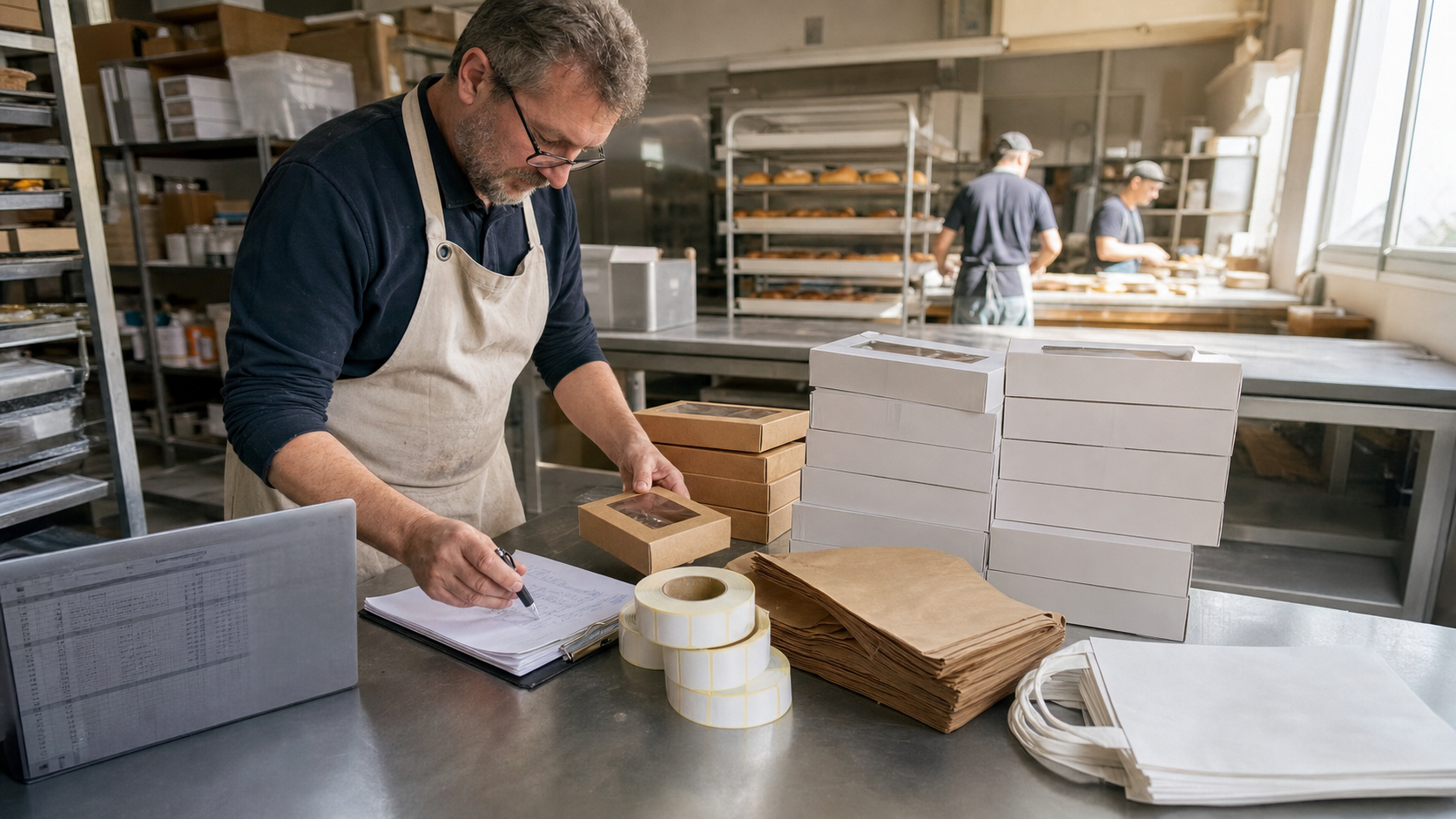
Bakery Packaging Cost Control: Track Boxes, Bags, and Labels Like Ingredients

FEFO Inventory Rotation for Bakeries: Reduce Waste Without Slowing Production
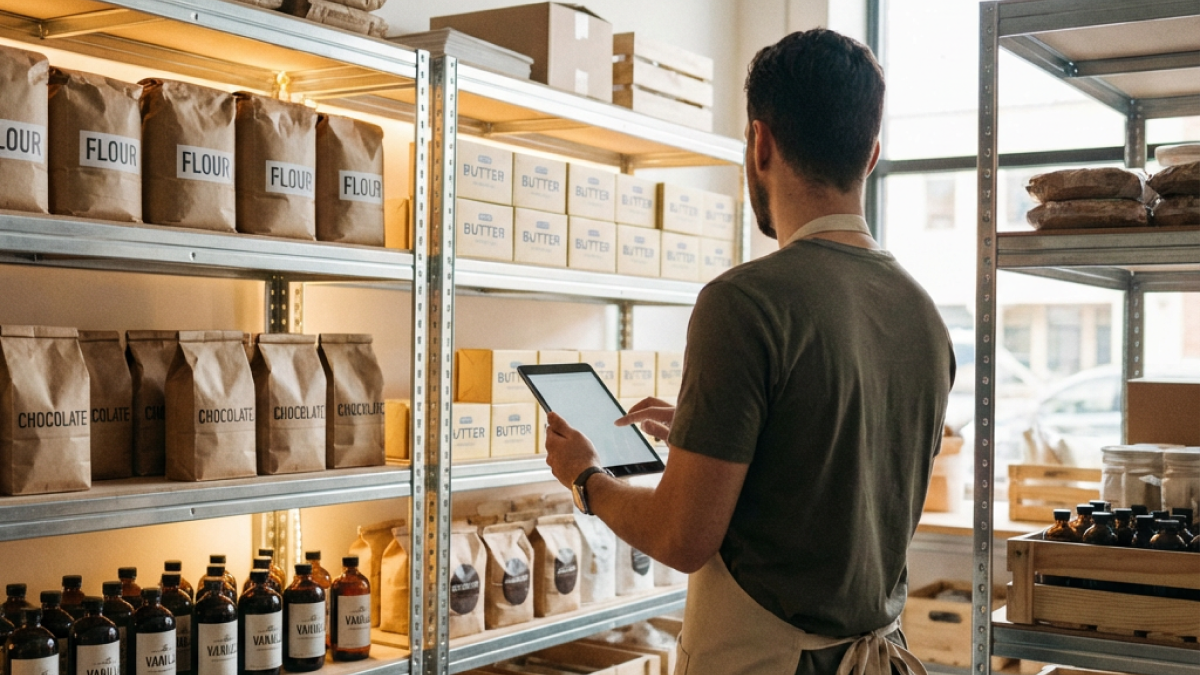
Bakery Par Levels and Safety Stock: A Practical Guide

The Hidden Costs of Poor Restaurant Inventory Management: A $50,000 Annual Problem