Bakery Energy Cost Control Playbook: Lower Utility Spend Without Slowing Output
Published: February 25, 2026
Energy is one of the most volatile costs in bakery operations. Most teams react to monthly bills instead of controlling energy in daily production decisions.
A bakery energy playbook connects utility use to output, shift behavior, and equipment scheduling.
Start with energy per unit produced
Total utility spend alone does not tell you whether performance improved.
Track:
` Energy per unit = Total energy cost / Total units produced `
This metric normalizes for volume changes and reveals process improvements.
Map the biggest energy loads
In most bakeries, the largest loads are:
- ovens
- proofers
- refrigeration/freezers
- compressed air
- HVAC in production areas
Build a simple estimate of share by load type to prioritize actions.
Fix startup and warm-up waste
A frequent loss source is early startup without synchronized production readiness.
Control steps:
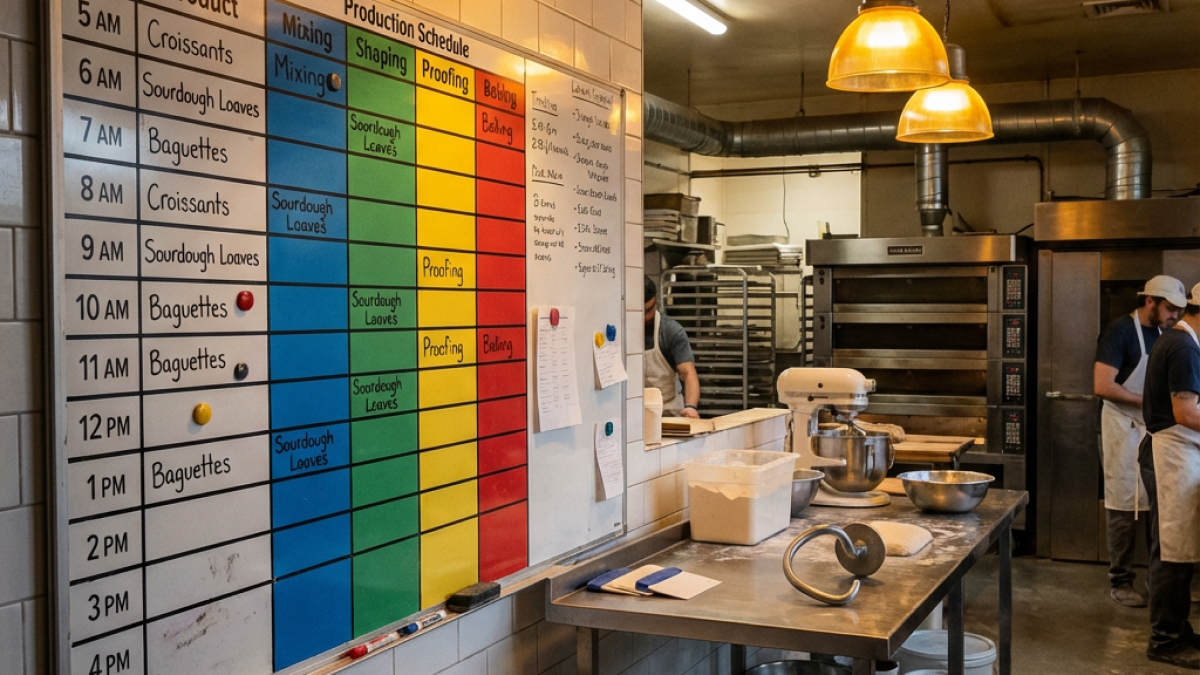
- align oven startup to first loaded bake window
- sequence proofers by product family and start time
- avoid preheating all zones at once when only partial capacity is needed
Fifteen to thirty minutes of unnecessary warm-up per shift can add meaningful monthly cost.
Optimize bake sequencing
Bake sequencing impacts both labor and energy.
Best practices:
- group products by temperature bands
- reduce setpoint swings between runs
- minimize idle oven gaps between batches
- pre-stage racks and pans to shorten door-open time
Every avoidable temperature transition is an energy penalty.
Audit compressed air and refrigeration leaks
Compressed air leaks and poor door discipline in cold storage are silent cost drivers.
Weekly checks:
- leak walkdown for hoses and fittings
- compressor off-cycle performance check
- freezer and cooler door-seal inspection
- open-door event review during picking windows
These are low-cost controls with fast payback.
Add shift ownership with visible KPIs
Post shift-level energy KPIs where supervisors can act on them.
Recommended daily board metrics:
- kWh or utility cost per 1,000 units
- oven idle minutes
- unplanned startup events
- out-of-sequence bake runs
- refrigeration alarm events
When teams see energy tied to behavior, performance improves.
Use tariff-aware scheduling when possible
If your utility plan includes peak and off-peak pricing, adjust flexible production blocks.
Examples:
- move non-urgent par-bake runs to lower-rate windows
- schedule sanitation and maintenance in peak-cost windows
- stagger high-draw equipment start to avoid demand spikes
Even modest schedule shifts can reduce demand charges.
Set a practical monthly target
Aim for incremental reduction, not unrealistic cuts.
A common target:
- 3% to 5% reduction in energy per unit over 90 days
Run improvement sprints by line or equipment cluster.
4-week rollout template
- Baseline energy per unit by week.
- Implement startup sequencing controls.
- Apply bake-sequence standard work.
- Add leak and door-discipline audits.
- Review weekly with operations and maintenance.
Energy control works best when it is operationalized into schedules, checklists, and shift accountability.
Try Diced OS to track production schedules, equipment utilization, and cost KPIs in one daily operating system. Diced OS
Related posts

How to Control Labor Cost in a Wholesale Bakery
Bakery Prep List by Station: Keep Mixing, Shaping, Baking, and Packing in Sync
Bakery Standing Orders for Wholesale Accounts: Keep Recurring Deliveries Accurate
Bakery Purchase Order Approval Workflow: Control Spend Without Slowing Production