
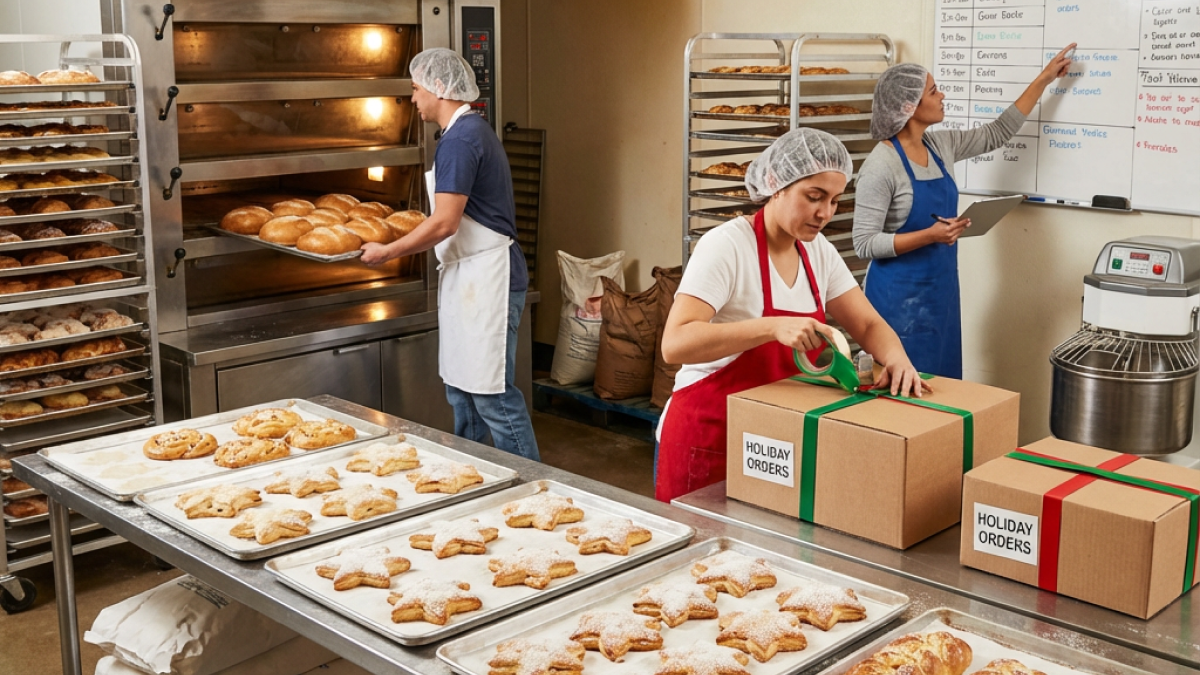
Holiday Rush Preparation: Planning for Peak Season Success in Your Wholesale Bakery
Published: December 5, 2025
Last November, I watched a talented baker nearly destroy his wholesale bakery business. He'd built solid accounts over two years—cafes, restaurants, a few grocery stores. Orders were growing steadily. Then holiday season hit like a freight train.
Orders tripled in three weeks. He couldn't keep up. Deliveries arrived late. Quality slipped. Two of his biggest accounts—representing 40% of his revenue—found other suppliers. They never came back.
The tragedy wasn't the chaos itself. Chaos during peak season is inevitable. The tragedy was that it was entirely predictable, and therefore entirely preventable.
For wholesale bakeries, holiday peak season represents both the greatest opportunity and the greatest risk of the year. Get it right, and you'll strengthen relationships, acquire new accounts, and generate the revenue that sustains you through slower months. Get it wrong, and you'll damage relationships that took years to build.
This guide covers practical commercial bakery planning for holiday success—from forecasting demand months in advance to executing flawlessly when the rush hits.
Understanding your seasonal demand pattern
Before you can plan for peak season, you need to understand exactly what "peak" means for your specific wholesale bakery.
Analyzing historical patterns
Pull your order data from the past 2-3 years and answer these questions:
When does your peak actually start?
- Some bakeries see volume increases beginning in late October
- Others don't see major changes until the week before Thanksgiving
- Christmas/New Year patterns may differ from Thanksgiving patterns
How large is the increase?
- Calculate the multiplier: peak week volume ÷ average week volume
- A 2x multiplier is common; 3x or more isn't unusual
- Different products may have different multipliers
Which products drive the increase?
- Some items (holiday breads, specialty pastries) spike dramatically
- Others (everyday sandwich bread) may stay relatively flat
- New seasonal items may have no historical data
How quickly does volume ramp up and down?
- Gradual increase over several weeks, or sudden spike?
- Immediate drop-off after the holiday, or extended tail?
Account-by-account forecasting
Aggregate data tells part of the story. Account-specific forecasting tells the rest.
For existing wholesale bakery accounts:
Three months before peak season, reach out directly:
"We're planning our holiday production schedule. Can you share your projected order increases for November and December? Any special items you're planning to feature?"
This conversation:
- Gets you more accurate forecasts than historical data alone
- Surfaces special requests before they become last-minute emergencies
- Demonstrates proactive bakery management
- Strengthens the relationship
For new accounts:
If you've added accounts since last peak season:
- Ask about their typical holiday volume
- Factor in learning curve (first-year ordering may be conservative)
- Build in contingency for unexpected increases
Building your demand forecast
Combine historical patterns with account-specific intelligence into a week-by-week forecast:
| Week | Historical Volume | Account Feedback | Adjusted Forecast |
|---|---|---|---|
| Oct 27 | +10% | Steady | +10% |
| Nov 3 | +15% | Early Thanksgiving prep | +20% |
| Nov 10 | +25% | Normal | +25% |
| Nov 17 | +50% | Major catering orders | +60% |
| Nov 24 | +100% | Thanksgiving peak | +110% |
| Dec 1 | +40% | Holiday party season | +45% |
| Dec 8 | +60% | Corporate orders confirmed | +70% |
| Dec 15 | +80% | Christmas push | +85% |
| Dec 22 | +120% | Final Christmas rush | +130% |
| Dec 29 | +20% | New Year's wind-down | +25% |
This forecast becomes your planning foundation.
Capacity planning and constraints
With demand forecast in hand, you need to understand what's limiting your capacity and how to expand it.
Identifying your bottlenecks
Every bakery has capacity constraints. Common bottlenecks include:
Production capacity
- Mixer capacity (batches per day)
- Oven space and cycle time
- Bench space for shaping and decorating
- Cooling and storage space
Labor capacity
- Experienced bakers available
- Specialized skill requirements (decorators, lamination experts)
- Physical stamina limits for extended shifts
Ingredient supply
- Supplier delivery schedules
- Storage capacity for bulk ordering
- Specialty ingredient lead times
Delivery capacity
- Vehicles available
- Driver availability
- Delivery route efficiency
Space constraints
- Finished goods storage
- Packaging and staging area
- Loading dock capacity
Map your current capacity against your demand forecast to identify gaps:
| Constraint | Current Capacity | Peak Demand | Gap |
|---|---|---|---|
| Croissant production | 400/day | 900/day | 500/day |
| Oven capacity | 1,200 lb/day | 2,000 lb/day | 800 lb/day |
| Experienced staff | 4 bakers | 7 needed | 3 bakers |
| Refrigerated storage | 500 sq ft | 800 sq ft needed | 300 sq ft |
| Delivery runs | 8/day | 12/day | 4 runs |
Expanding capacity strategically
Once you've identified gaps, address them systematically:
Production capacity solutions:
- Extended hours (earlier starts, later finishes)
- Additional shifts
- Pre-production of components that hold well
- Outsourcing commodity items to focus internal capacity on specialties
- Temporary equipment rental
Labor solutions:
- Hire seasonal staff early (August/September)
- Cross-train existing staff on multiple positions
- Partner with culinary schools for skilled temporary labor
- Bring back former employees who know your systems
- Schedule mandatory rest to prevent burnout-related quality issues
Supply solutions:
- Lock in ingredient commitments with suppliers early
- Increase storage capacity (temporary refrigerated trailers, off-site storage)
- Identify backup suppliers for critical ingredients
- Stock up on non-perishables in advance
Delivery solutions:
- Partner with reliable contract drivers
- Adjust delivery schedules to increase route density
- Use customer pickup options where feasible
- Rent additional vehicles if needed
The math of capacity expansion
Every capacity solution has costs. Run the numbers before committing:
Example: Adding a night shift for croissant production
Additional capacity: 400 croissants/night × 30 peak days = 12,000 units
Costs:
- Night shift labor premium: $5,000
- Additional ingredient costs: Already in product cost
- Utilities: $500
- Supervision/quality control: $1,500
- Total additional cost: $7,000
Revenue from additional units: 12,000 × $2.50 = $30,000
Net benefit: $23,000 in additional gross margin
This analysis helps prioritize which capacity constraints to address first.
Inventory and ingredient strategy
Running out of ingredients during peak season is an unforced error. Oversocking perishables is expensive waste. Getting this balance right requires planning.
Categorizing ingredients by planning approach
Category A: Long shelf-life staples
- Flour, sugar, salt, dried fruits, nuts
- Strategy: Stock up 4-6 weeks before peak season
- Risk: Low—these items hold indefinitely
Category B: Medium shelf-life items
- Butter, eggs, cream, fresh yeast
- Strategy: Secure delivery commitments from suppliers; increase order frequency
- Risk: Medium—supplier shortages possible
Category C: Short shelf-life specialty items
- Fresh fruits, specialty dairy, custom decorations
- Strategy: Order based on confirmed customer orders; build in lead time
- Risk: High—both shortage and waste possible
Supplier communication
Don't assume your suppliers can handle your increased volume. Have explicit conversations:
Questions to ask:
- Can you guarantee delivery of [quantity] during [date range]?
- What's your lead time during peak season?
- Do I need to commit to volumes in advance?
- What's your backup plan if your supply chain has issues?
- Are prices locked, or should I expect holiday increases?
Commitments to secure:
- Written confirmation of quantities and delivery dates
- Price agreements for peak period
- Priority status if supply becomes constrained
- Communication protocols if problems arise
Building inventory buffers
For Category A items, calculate safety stock:
Safety Stock Formula: Safety Stock = (Maximum Daily Usage × Maximum Lead Time) - (Average Daily Usage × Average Lead Time)
Example: Flour
- Average daily usage: 200 lb
- Average lead time: 2 days
- Peak daily usage: 450 lb
- Peak lead time (supplier stretched): 4 days
Safety Stock = (450 × 4) - (200 × 2) = 1,800 - 400 = 1,400 lb
Stock at least 1,400 lb of flour above normal levels before peak season begins.
Managing the butter challenge
Butter deserves special attention. It's expensive, essential for laminated products, and prices spike seasonally.
Strategies:
- Lock in pricing with suppliers 2-3 months ahead
- Increase frozen inventory gradually (butter freezes well)
- Identify secondary suppliers in case primary can't deliver
- Adjust product mix if prices become prohibitive
Staffing for peak season
Labor is typically the biggest constraint for bakery holiday production. Planning staffing months in advance is essential.
Seasonal hiring timeline
3 months before peak:
- Determine headcount needs by position
- Post job listings
- Reach out to former seasonal employees
- Contact culinary schools about placements
2 months before peak:
- Interview and select candidates
- Complete background checks/paperwork
- Begin scheduling training sessions
1 month before peak:
- Train seasonal staff on equipment and procedures
- Pair new staff with experienced mentors
- Run trial production at projected volumes
- Identify any skills gaps
2 weeks before peak:
- Finalize peak season schedules
- Confirm all staff availability
- Brief entire team on peak season expectations
- Review contingency plans
Training seasonal staff efficiently
You don't have time to train seasonal hires on everything. Focus on what matters:
Must-know:
- Core production tasks they'll perform
- Safety and sanitation requirements
- Quality standards for key products
- Communication and escalation procedures
Nice-to-know:
- Broader context of bakery operations
- Multiple positions (cross-training)
- Advanced techniques
Create clear, visual training materials:
- Photo cards showing quality standards
- Checklists for each production task
- Video demonstrations of techniques
- Posted reminders at each station
Scheduling for sustained performance
Peak season isn't a sprint; it's a marathon. Schedules that work for one week will cause burnout over six weeks.
Scheduling principles:
- Build in rest: No more than 6 consecutive days without a day off
- Rotate demanding tasks: Don't have the same person on croissant lamination every day
- Schedule breaks: Actual breaks, not just "whenever you can"
- Plan for absences: Assume 10-15% unplanned absences during peak
Shift coverage:
- Cross-train staff so coverage is possible
- Have on-call backup staff identified
- Document which tasks can be delayed vs. which are critical
- Know when to pivot to contingency plans
Managing team morale
Stressed, exhausted staff make mistakes. Invest in morale:
- Communicate openly about what's coming and why it matters
- Celebrate wins (records broken, perfect quality days)
- Provide meals during long shifts
- Express genuine appreciation for extra effort
- Address problems quickly so they don't fester
- Consider peak season bonuses tied to performance
Production planning and execution
With ingredients, staff, and capacity aligned, production planning becomes possible.
The production calendar
Build a week-by-week production plan:
Week -4: Pre-production phase
- Produce and freeze items that hold well (cookie doughs, pie shells)
- Build inventory of long-shelf-life components
- Validate that systems and equipment are ready
Week -2: Ramp-up phase
- Increase production volume gradually
- Work out kinks in peak processes
- Finalize delivery schedules
Peak weeks: Execution phase
- Daily production tied to confirmed orders
- Just-in-time production for perishable items
- Continuous quality monitoring
Week +1: Recovery phase
- Return to normal schedules
- Debrief on what worked and didn't
- Thank staff and customers
Daily production rhythm
Establish a consistent rhythm that maximizes efficiency:
Early morning (4 AM - 8 AM):
- Finish overnight proofs
- Bake first rounds
- Quality check against orders
- Load first deliveries
Morning (8 AM - 12 PM):
- Continue baking
- Begin mixing for next day
- Handle any production issues
- Coordinate with delivery team
Afternoon (12 PM - 4 PM):
- Finish production for day
- Prepare for overnight proofs
- Inventory check and ordering
- Equipment cleaning and prep
Evening/Night (4 PM - 4 AM):
- Night shift production (if applicable)
- Overnight fermentation and proofing
- Prep work for morning
Quality control during peak season
Volume pressure can compromise quality. Build in safeguards:
Checkpoints:
- Weight checks on every batch
- Visual inspection of representative items
- Temperature monitoring for proofing and storage
- Random finished product tasting
Documentation:
- Log all production batches
- Note any deviations from standard
- Track customer complaints immediately
- Connect complaints to specific batches
Authority to stop:
- Designate who can halt production for quality issues
- Establish clear escalation paths
- Never ship product that doesn't meet standards
It's better to be short on inventory than to ship substandard products during the holiday season.
Order management and customer communication
Peak season success requires flawless order management and proactive communication.
Order cutoffs and confirmation
Establish clear policies:
Order deadlines:
- Standard items: Order by 2 PM, two days before delivery
- Specialty items: Order by noon, one week before delivery
- Custom orders: Order by [date], subject to availability
Confirmation process:
- Acknowledge all orders within 4 hours
- Confirm quantities, delivery times, and any special instructions
- Send reminder 24 hours before delivery
Changes and additions:
- Changes allowed until [cutoff time]
- Late additions subject to availability
- Clear process for communicating when requests can't be met
Proactive customer communication
Don't wait for customers to have questions:
Before peak season:
- Send peak season ordering guidelines to all accounts
- Review anticipated needs with major accounts
- Confirm any special arrangements
During peak season:
- Confirm orders promptly
- Alert customers immediately if any issues arise
- Provide delivery time updates
After peak season:
- Thank customers for their business
- Solicit feedback on peak season performance
- Address any outstanding issues
Managing order overflow
When demand exceeds capacity:
Prioritization framework:
- Committed orders from existing accounts (must fulfill)
- Repeat orders from loyal customers (high priority)
- New orders from existing accounts (accommodate if possible)
- New orders from new prospects (only if capacity exists)
Saying no gracefully: "I want to be upfront with you—we're at capacity for croissants during the week of December 20th. I can offer [alternative product] or [different quantity]. What would work best for you?"
A honest "no" protects your reputation better than an overpromise you can't keep.
Delivery logistics during peak season
Production means nothing if products don't reach customers correctly.
Route optimization
During peak season, delivery efficiency matters more than ever:
- Group deliveries geographically
- Adjust delivery times to avoid traffic
- Increase vehicle utilization
- Consider multiple delivery windows
Example optimization: Normal season: 8 deliveries across 6 routes = 6 driver-hours Peak season with same routes: 14 deliveries = 10+ driver-hours
Optimized peak routes: 14 deliveries across 5 dense routes = 7 driver-hours
Vehicle and equipment preparation
Before peak season:
- Service all delivery vehicles
- Check refrigeration units
- Stock extra packaging materials
- Have backup vehicle arrangements
During peak season:
- Daily vehicle checks
- Keep vehicles clean and organized
- Monitor refrigeration temperatures
- Have emergency contacts ready
Driver briefing and support
Drivers are customer-facing during peak stress:
Briefing points:
- Peak season expectations and schedules
- Communication protocols for issues
- Customer interaction standards
- What to do when things go wrong
Support during peak:
- Reasonable schedules with proper breaks
- Clear driving directions and parking guidance
- Emergency contact information
- Recognition for exceptional service
Technology and systems for peak season
The right systems make peak season manageable. The wrong ones—or none at all—make it chaotic.
Order management systems
Ditch paper and spreadsheets for peak season. You need:
- Centralized order capture
- Automatic order confirmation
- Production scheduling integration
- Delivery route planning
- Real-time status visibility
Even simple digital tools beat manual processes when volume spikes.
Inventory management
Track inventory in real-time:
- Ingredient levels against production needs
- Finished goods by product and location
- Waste and shrinkage
- Reorder triggers
Tools like Diced OS help wholesale bakeries track inventory and production during high-volume periods, reducing the chaos that leads to mistakes.
Communication tools
Peak season requires rapid communication:
- Team messaging for production issues
- Customer communication channels
- Supplier contact management
- Escalation protocols
Everyone should know how to reach who they need, when they need them.
Post-peak review and continuous improvement
After the rush passes, capture what you learned:
Immediate debrief (Week +1)
While memories are fresh:
- What went well?
- What problems occurred?
- What was missing that would have helped?
- What will we do differently next year?
Document everything. Next year's peak season plan starts with this year's lessons.
Data analysis
Review the numbers:
- Actual volume vs. forecast (by product, by week)
- Capacity utilization
- Quality metrics
- Customer complaints
- Financial performance
Identify patterns:
- Which forecasts were off, and why?
- Which products caused the most problems?
- Where were the real bottlenecks?
Relationship assessment
Evaluate account health after peak season:
- Any accounts show signs of dissatisfaction?
- Any new accounts established during peak?
- Any opportunities for growth identified?
Follow up with key accounts to strengthen relationships and address any lingering concerns.
The peak season planning timeline
Putting it all together, here's a timeline for peak season preparation:
4 months before (July-August for November-December):
- Begin demand forecasting
- Start seasonal hiring process
- Review and lock in supplier agreements
3 months before:
- Finalize demand forecast
- Complete hiring
- Order equipment or arrange rentals
- Begin ingredient stockpiling (long-shelf items)
2 months before:
- Train seasonal staff
- Test production processes at higher volumes
- Finalize delivery arrangements
- Communicate peak season policies to customers
1 month before:
- Conduct full team briefing
- Final equipment checks and maintenance
- Complete inventory buildup
- Confirm all customer orders for peak period
2 weeks before:
- Final schedule publication
- Contingency plan review
- Customer order confirmations
- Last supply deliveries
Peak period:
- Execute planned production
- Daily monitoring and adjustment
- Constant communication
- Document issues for post-review
Post-peak:
- Team recognition and thank-you
- Customer follow-up
- Debrief and lessons learned
- Begin planning improvements for next year
Peak season is planning season
The difference between bakeries that thrive during holidays and those that struggle isn't talent or equipment—it's preparation. Peak season success is determined in the months before the rush arrives.
Start planning early. Communicate clearly. Build systems that scale. And when the orders flood in, you'll be ready.
Your wholesale bakery accounts depend on you during their busiest time. Meet that responsibility, and you'll cement relationships that last far beyond the holiday season.
Related posts
Bakery Prep List by Station: Keep Mixing, Shaping, Baking, and Packing in Sync
Bakery Standing Orders for Wholesale Accounts: Keep Recurring Deliveries Accurate
Bakery Lot Traceability: A Practical Recall-Ready System for Small Teams

Bakery Supplier Scorecard Template: Evaluate Vendors Beyond Price