
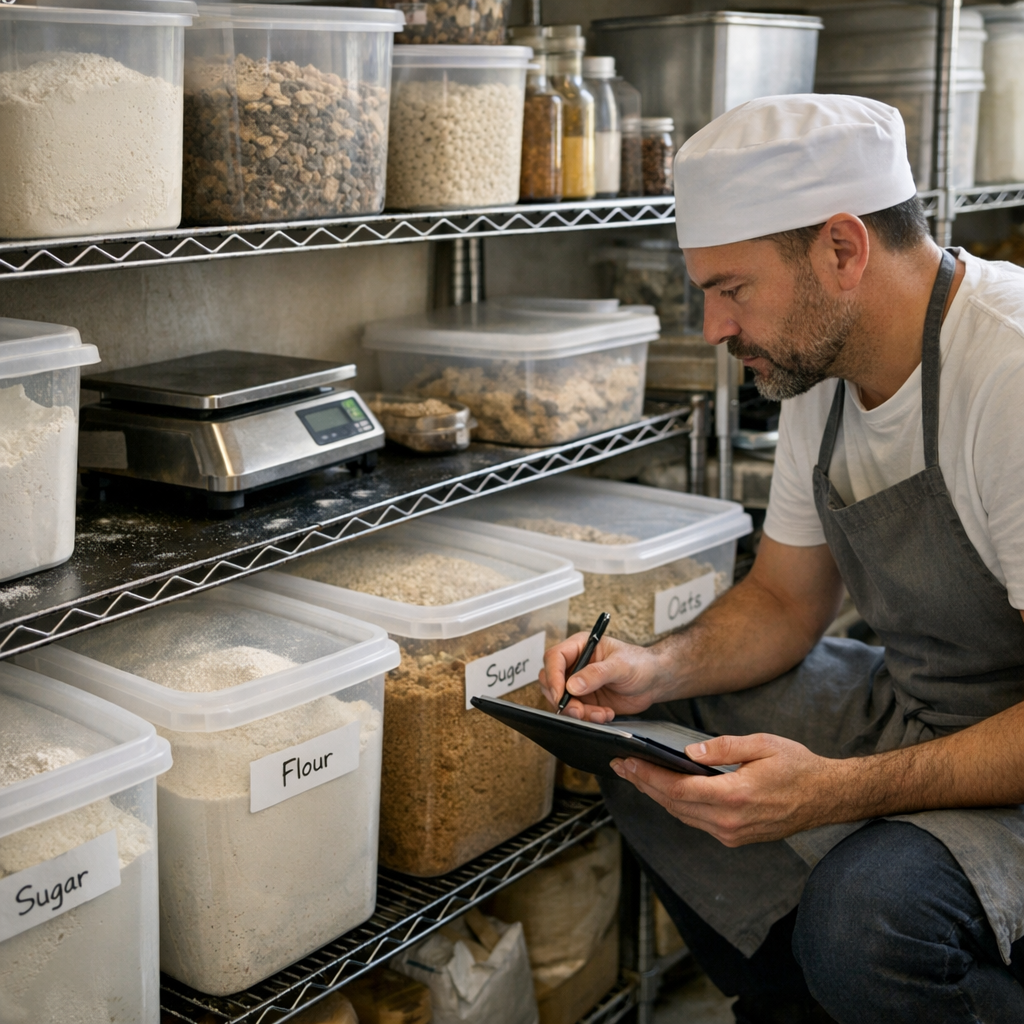
Cycle Counting for Bakery Inventory (No More Full Counts)
Published: February 20, 2026
Full inventory counts are disruptive and rarely accurate. In busy bakeries, they also happen too late to fix errors. Cycle counting solves this by spreading small counts across the week so your inventory stays accurate without stopping production.
This guide shows how to build a bakery-friendly cycle count plan.
What cycle counting is
Cycle counting is a schedule of small, frequent counts that keeps inventory accurate all month. Instead of counting everything once, you count a small group of items every day or week.
Benefits:
- Less disruption
- Faster error detection
- Cleaner COGS reporting
- Better purchasing decisions
Start with ABC categories
Not all ingredients deserve the same attention. Use simple ABC categories based on cost and risk.
- A items: High-cost or high-risk ingredients (butter, chocolate, specialty nuts)
- B items: Mid-cost staples (flour, sugar, eggs)
- C items: Low-cost or low-risk items (salt, minor inclusions)
Count A items more often than B and C.
Build a weekly cycle count plan
Here is a simple weekly plan that works in most bakeries.
- Monday: A items
- Wednesday: A items plus one B category
- Friday: Remaining B items and one C category
Rotate the C items weekly. A and B items should be counted every week or every other week depending on volume.
Pick a consistent time
The best time is when the kitchen is calm. Consistency matters more than the exact hour.
Common windows:
- After morning bake, before prep starts
- Late afternoon before cleanup
Make it a fixed slot so the team expects it.
Use a variance log
When a count does not match the system, log it before you adjust it. This shows where your processes are leaking.
Record:
- Item name
- Counted quantity
- System quantity
- Variance value
- Likely cause
Common causes:
- Unrecorded waste
- Inaccurate recipe yields
- Receiving errors
- Portioning errors
Fix the root causes
Cycle counting is not just for accuracy. It is a diagnostic tool.
Top fixes:
- Add receiving checks for A items
- Tighten portion control on high-cost items
- Update recipe yields monthly
- Track waste daily
The point is to reduce variance over time.
Keep it light for the team
Cycle counting fails if it feels like punishment. Make it quick and simple.
Guidelines:
- One person owns the count
- Standard bin labels and units
- One scale and one tablet
- No counting during rushes
A good count takes 15 to 30 minutes.
Measure results
Track these metrics monthly:
- Inventory variance percentage
- Emergency purchases per month
- COGS volatility
- Waste trend for A items
If variance drops and emergency buys decline, the plan is working.
Try Diced OS to track inventory in real time, streamline counts, and improve COGS accuracy. Diced OS
Related posts

Food Waste Reduction in Bakeries: Cut Costs by 20% with Smart Inventory Management
Bakery Prep List by Station: Keep Mixing, Shaping, Baking, and Packing in Sync
Bakery Standing Orders for Wholesale Accounts: Keep Recurring Deliveries Accurate
Bakery Lot Traceability: A Practical Recall-Ready System for Small Teams
