Why Free Food Costing Tools Aren't Enough for Wholesale Bakeries
Published: November 21, 2025
I'm not here to sell you something. I'm here to tell you the truth about free tools: they work until they don't.
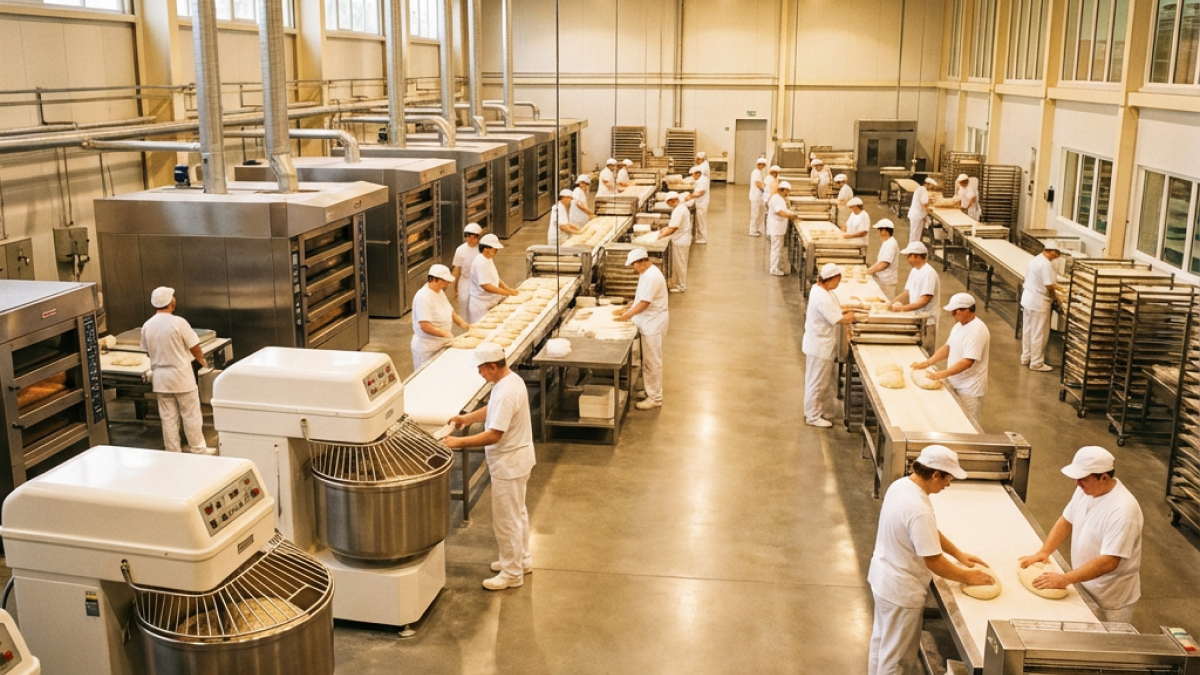
If you're a home baker selling at farmers markets, a free food cost calculator app might be all you ever need. But if you're running a wholesale bakery—multiple products, multiple accounts, real production volume—free tools will eventually fail you.
Not because they're bad tools. Because they weren't built for your complexity.
What Free Tools Actually Offer
Let's be fair about what you get:
The Good Parts
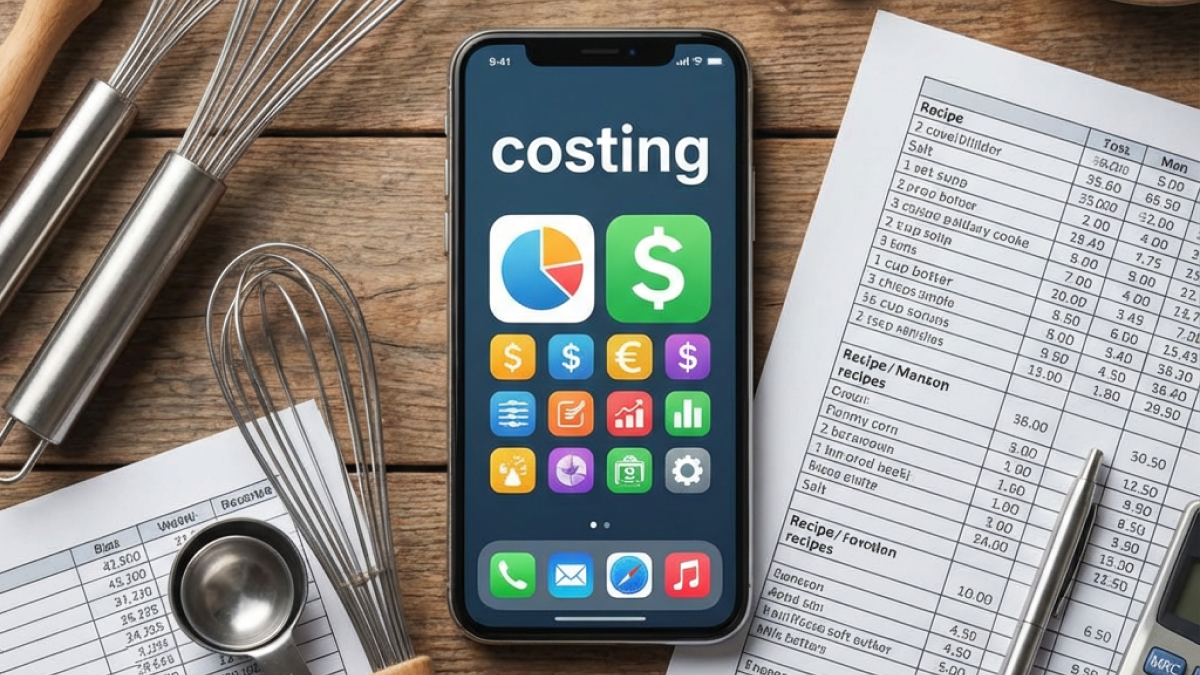
Basic recipe costing: Enter ingredients, enter quantities, see total cost. The math works.
Ingredient databases: Pre-loaded common ingredients so you don't start from zero.
Simple margin calculations: Cost vs. price, margin percentage. Helpful for pricing decisions.
Low barrier to entry: No credit card required, no commitment. Try it today.
For simple operations, this is genuinely useful. A bakery with 10 products selling retail can run effectively on free tools indefinitely.
The Limitations
Free tiers exist to convert you to paid. They're intentionally limited:
Recipe caps: 10-25 recipes on most free tiers. A wholesale bakery with bread, pastry, cookies, and custom items easily exceeds this.
Single user: You can't share access with your production manager or accountant.
No sub-recipes: That laminated dough you use in five products? Enter it separately in each recipe.
Manual price updates: When butter costs change, you update every recipe individually.
Manual price entry: You manually extract and enter prices from invoices.
Limited export: Your data is trapped inside the platform.
No support: When something breaks or you have questions, you're on your own.
Where Wholesale Bakeries Hit Walls
The Recipe Count Problem
You make:
- 8 bread varieties
- 12 pastry items
- 6 cookie types
- 4 muffin varieties
- Seasonal specials (5-10 rotating)
- Custom items for specific accounts
That's 35-40 recipes minimum. Most free tiers cap at 15-25.
Workaround options:
- Create multiple accounts (messy, disconnected data)
- Delete old recipes to add new ones (lose history)
- Track additional recipes in spreadsheets (defeats the purpose)
None of these are real solutions.
The Sub-Recipe Problem
Your croissant dough appears in:
- Plain croissant
- Pain au chocolat
- Almond croissant
- Ham and cheese croissant
- Seasonal fillings
Without sub-recipe support, you're entering that dough five times. When butter prices change, you're updating five recipes.
Miss one? Your costs are wrong.
The Price Update Problem
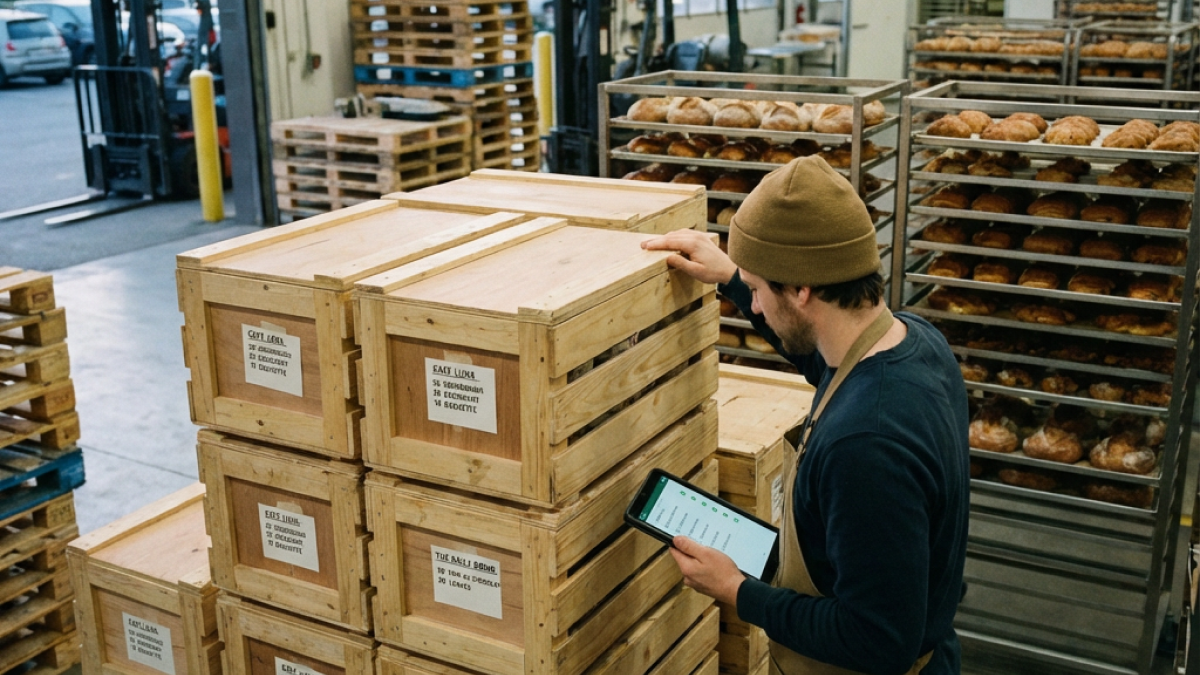
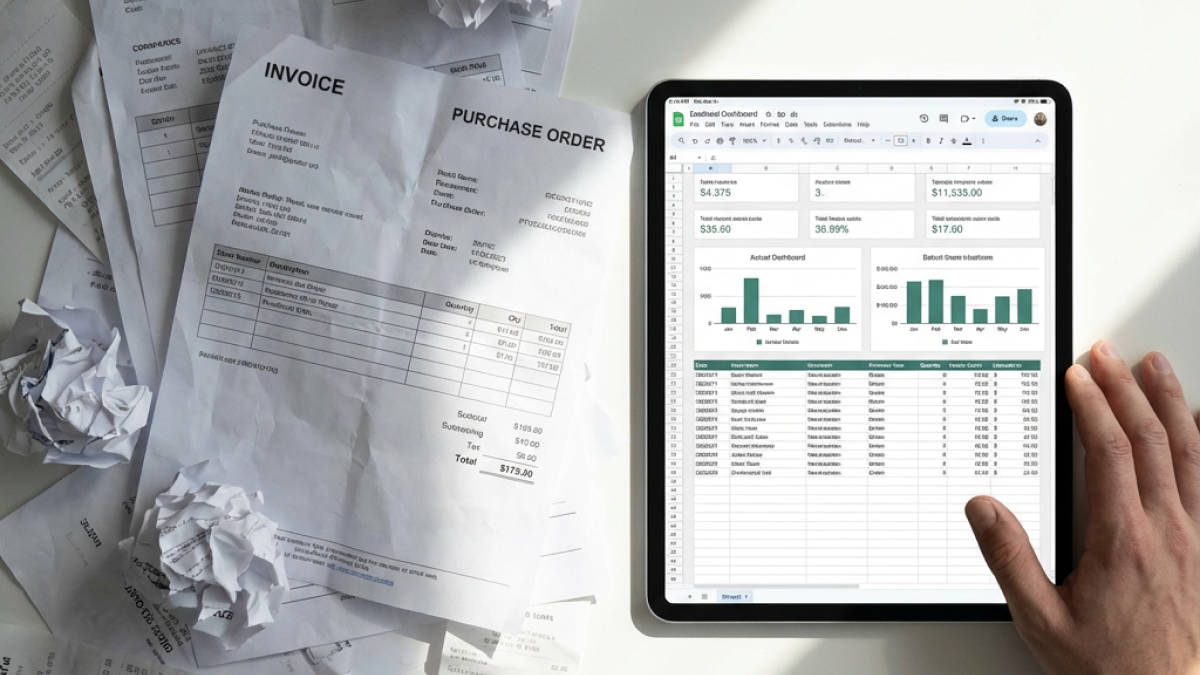
A typical wholesale bakery receives invoices from 3-5 suppliers weekly. Each invoice might contain 15-30 items with potentially changed prices.
With free tools: manually compare each line to your ingredient database. Enter changes one by one. Propagate to affected recipes manually.
Time required: 1-2 hours weekly Accuracy: Variable (you'll miss changes)
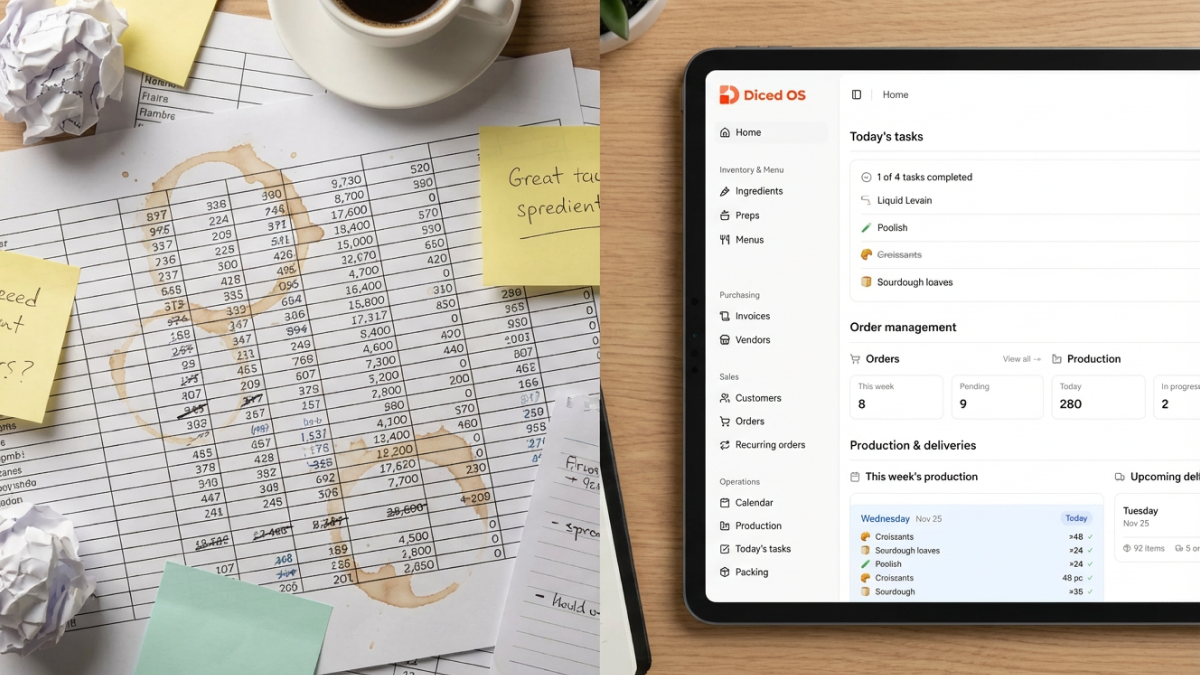
With proper tools: scan invoice, auto-detect price changes, confirm updates, automatic propagation to all recipes.
Time required: 10-15 minutes weekly Accuracy: Consistent
The Multi-Account Problem
Wholesale means multiple customers paying different prices:
- Cafe A: standard wholesale
- Cafe B: volume discount
- Restaurant C: negotiated rate
- Hotel D: different product mix
Free tools don't handle customer-specific pricing. You can't see profitability by account.
The Historical Data Problem
What did flour cost in March? How have your margins trended this quarter? When did butter prices spike last year?
Free tools show you now. They rarely maintain useful history.
Without history, you can't:
- Identify trends
- Plan for seasonal cost changes
- Document price justifications
- Analyze long-term profitability
The Integration Problem
Your POS tracks sales. Your accounting software tracks expenses. Your production system tracks output.
Free food costing tools don't talk to these systems. Data lives in silos. Connecting the picture requires manual work.
The True Cost of Free
"But it's free!"
Yes. But what does "free" actually cost you?
Time Cost
Hours spent on manual workarounds that paid tools automate:
- Manual price updates across recipes
- Copying data between systems
- Rebuilding analysis that proper tools generate automatically
Your time has value. If free tools cost you 5 hours weekly in extra work, and your time is worth $30/hour, that's $600/month—more than most paid tools cost.
Accuracy Cost
Manual processes have errors. You miss a price update here, fat-finger a number there.
If those errors cause you to underprice one product by $0.20, and you sell 200 units weekly, that's $160/month in unrecognized margin loss.
Opportunity Cost
Time spent wrestling with tool limitations is time not spent:
- Developing new products
- Building customer relationships
- Analyzing your business
- Actually baking
Decision Quality Cost
With limited data and analysis capability, you make worse decisions. You can't see which accounts are profitable. You don't know when to raise prices. You miss margin erosion.
These invisible costs exceed the visible cost of paid tools.
When to Make the Switch
Not everyone needs to switch. Here are signals that it's time:
You've Hit Recipe Limits
If you're gaming the system—deleting recipes, using multiple accounts, maintaining parallel spreadsheets—the free tier isn't working.
Manual Updates Take Too Long
If invoice processing and price updates consume more than an hour weekly, automation pays for itself.
You Have Wholesale Accounts
The complexity of customer-specific pricing, account profitability, and order management exceeds free tool capabilities.
You Employ Staff
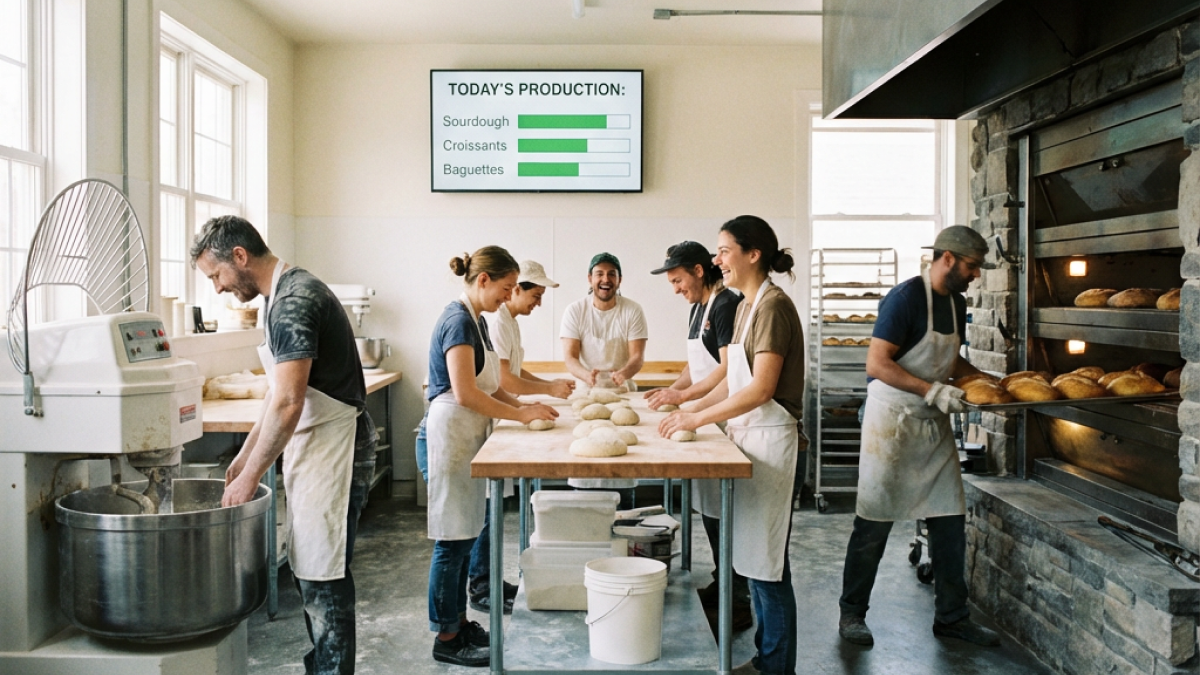
Multiple people need access. You need to delegate without duplicating work.
You're Making Decisions Blind
If you can't answer basic questions—"Which accounts are profitable?" "What's our food cost percentage this month?" "How much did butter increase since January?"—you need better tools.
You're Growing
Growth amplifies problems. What's manageable at 30 recipes and 5 accounts becomes overwhelming at 60 recipes and 15 accounts.
What to Look For in Paid Tools
Not all paid tools are worth the investment. Evaluate based on what free tools lack:
Unlimited (or High) Recipe Count
Your business shouldn't be constrained by arbitrary limits.
Sub-Recipe Support
One update propagates everywhere. Essential for bakeries with shared components.
Automatic Price Propagation
When ingredient prices change, recipe costs should update automatically across all products.
Customer/Account Management
Different pricing, order tracking, account-level profitability.
Reporting and History
Trends over time, variance analysis, actionable insights.
Multi-User Access
Share with your team appropriately.
Data Export
Your data should be portable. Don't trade one lock-in for another.
Bakery-Specific Design
Tools built for restaurants handle table service and tips. Tools built for bakeries handle batches, yields, and production scheduling.
The Transition
Moving from free tools to paid ones requires effort:
Data Migration
Export what you can from free tools. Re-enter what you can't. Clean up inconsistencies.
Learning Curve
New interface, new workflow. Budget time to learn.
Team Training
Everyone who touches the system needs to understand it.
Parallel Running
Consider running old and new systems together briefly. Verify the new system produces accurate results.
Commitment
Once you've invested in setup, commit to actually using it. Half-adoption wastes the investment.
The Bottom Line
Free food costing app options serve a purpose. They let you learn concepts, test ideas, and manage simple operations without upfront cost.
But for wholesale bakeries—where margin matters, accuracy matters, and time matters—free tools eventually cost more than they save.
The question isn't whether free tools are good (they can be). The question is whether they're good enough for where your business is now and where it's heading.
If the answer is no, the investment in proper tools isn't an expense. It's a foundation for running your bakery like a business.
Ready to see what purpose-built bakery tools can do? Visit dicedos.com to explore features designed specifically for wholesale bakery operations—no arbitrary limits, no missing functionality, no workarounds required.