HACCP for Bakeries: A Practical Plan and Audit Prep
Published: February 23, 2026
A bakery HACCP plan is not just for large factories. It is a structured way to control food safety risks, pass audits, and protect your brand.
You do not need a 200-page manual. You need a clear plan that your team can follow.
Step 1: Map your process flow
Document the full process from receiving to delivery.
Typical bakery steps:
- Receiving
- Storage
- Mixing
- Proofing
- Baking
- Cooling
- Packaging
- Distribution
This flow becomes the base for your hazard analysis.
Step 2: Identify hazards
HACCP looks at three hazard types:
- Biological (pathogens)
- Chemical (cleaners, allergens)
- Physical (metal, glass, plastic)
At each step, list the likely hazards and how you control them.
Step 3: Define critical control points
Not every step is a CCP. A CCP is where you can prevent, eliminate, or reduce a hazard to a safe level.
Common bakery CCPs:
- Baking temperature and time
- Cooling time limits
- Metal detection for packaged items
If you do not use a metal detector, document other controls such as supplier certificates and visual inspection.
Step 4: Set critical limits
Every CCP needs a clear limit.
Examples:
- Minimum internal bake temperature: 190°F
- Maximum cooling time to packaging: 2 hours
- Metal detector sensitivity: per manufacturer spec
Your limits must be measurable.
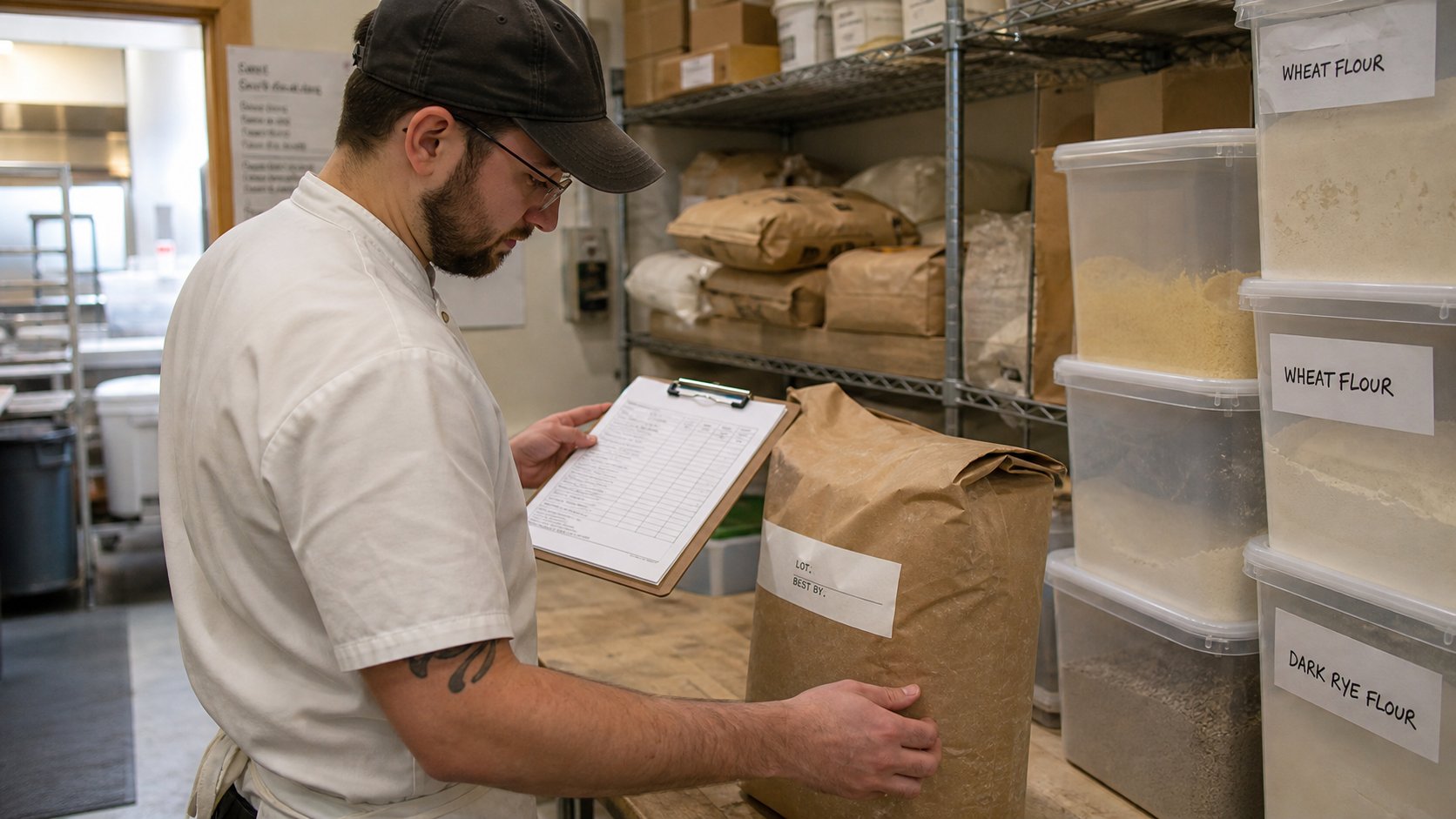
Step 5: Create monitoring logs
If it is not recorded, it did not happen.
Monitoring logs should include:
- Date and time
- Product or batch
- Measured value
- Operator initials
Keep logs simple so they are actually used.
Step 6: Define corrective actions
Your plan should state exactly what happens when a limit is missed.
Example corrective actions:
- Re-bake or discard affected batch
- Hold product for inspection
- Investigate equipment calibration
Step 7: Verify and audit
Verification proves the plan works.
Verification tasks:
- Thermometer calibration weekly
- Metal detector checks daily
- Internal HACCP audit monthly
Keep a short audit checklist and store results with your logs.
Step 8: Train the team
A HACCP plan only works if people follow it.
Train on:
- Why CCPs matter
- How to record logs
- What to do when limits are missed
Repeat training for new hires and refresh annually.
Try Diced OS to manage production records, batch tracking, and audit-ready logs. Diced OS